17 Hours Alone on Half Dome Through a Stormy Night
Jul 13 13:45
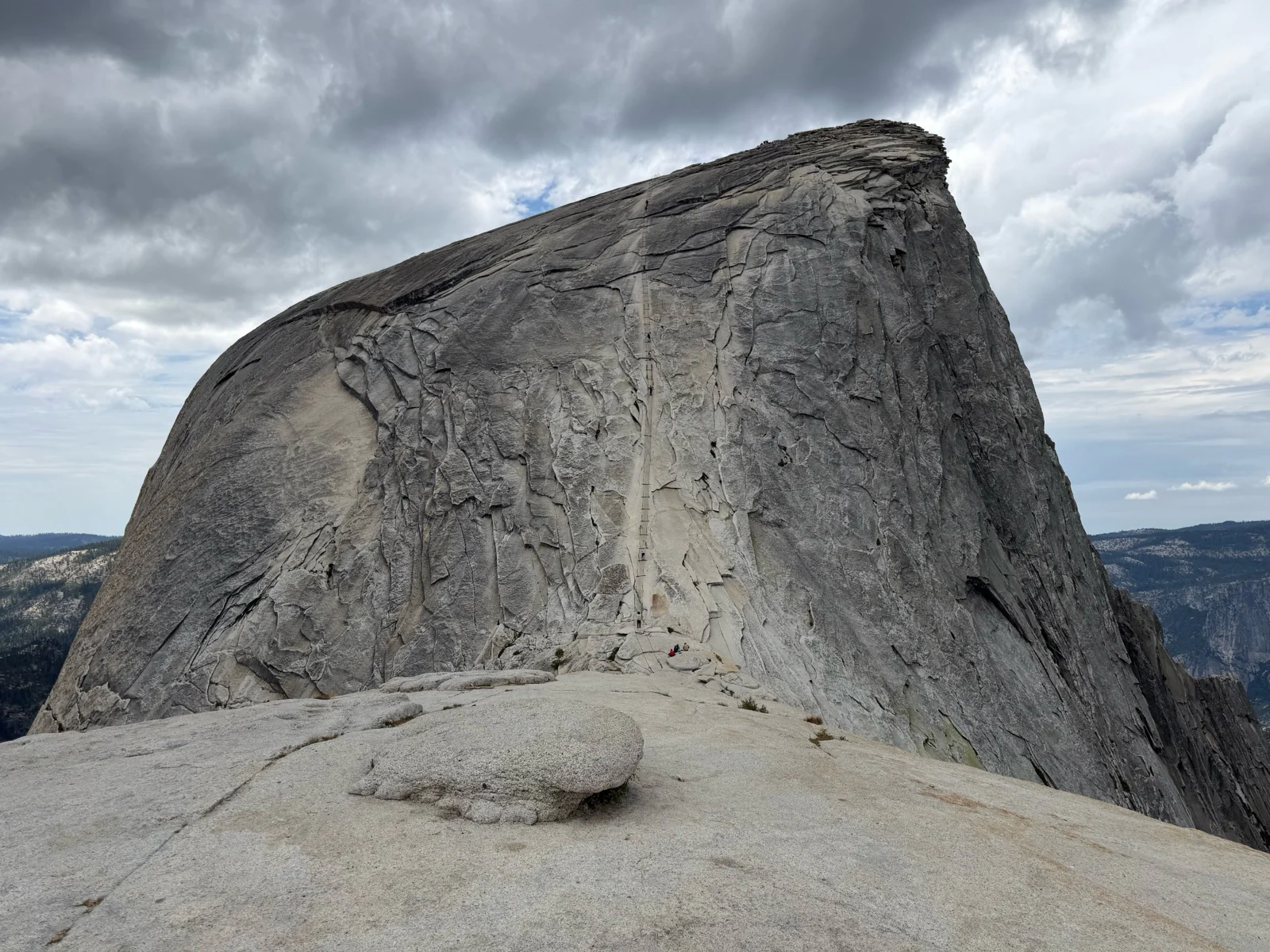
Minutes after I topped out on Half Dome, a rain cloud drifted in and everyone started to retreat. The route up Half Dome is a seventy-to-eighty-degree granite face; in summer, steel cables are strung along both sides, running straight to the summit. You climb by balancing with both hands on the cables and trusting the friction between your soles and the granite. Everyone going up and coming down shares the same single lane, weaving past each other where they meet.
Jul 13 14:00
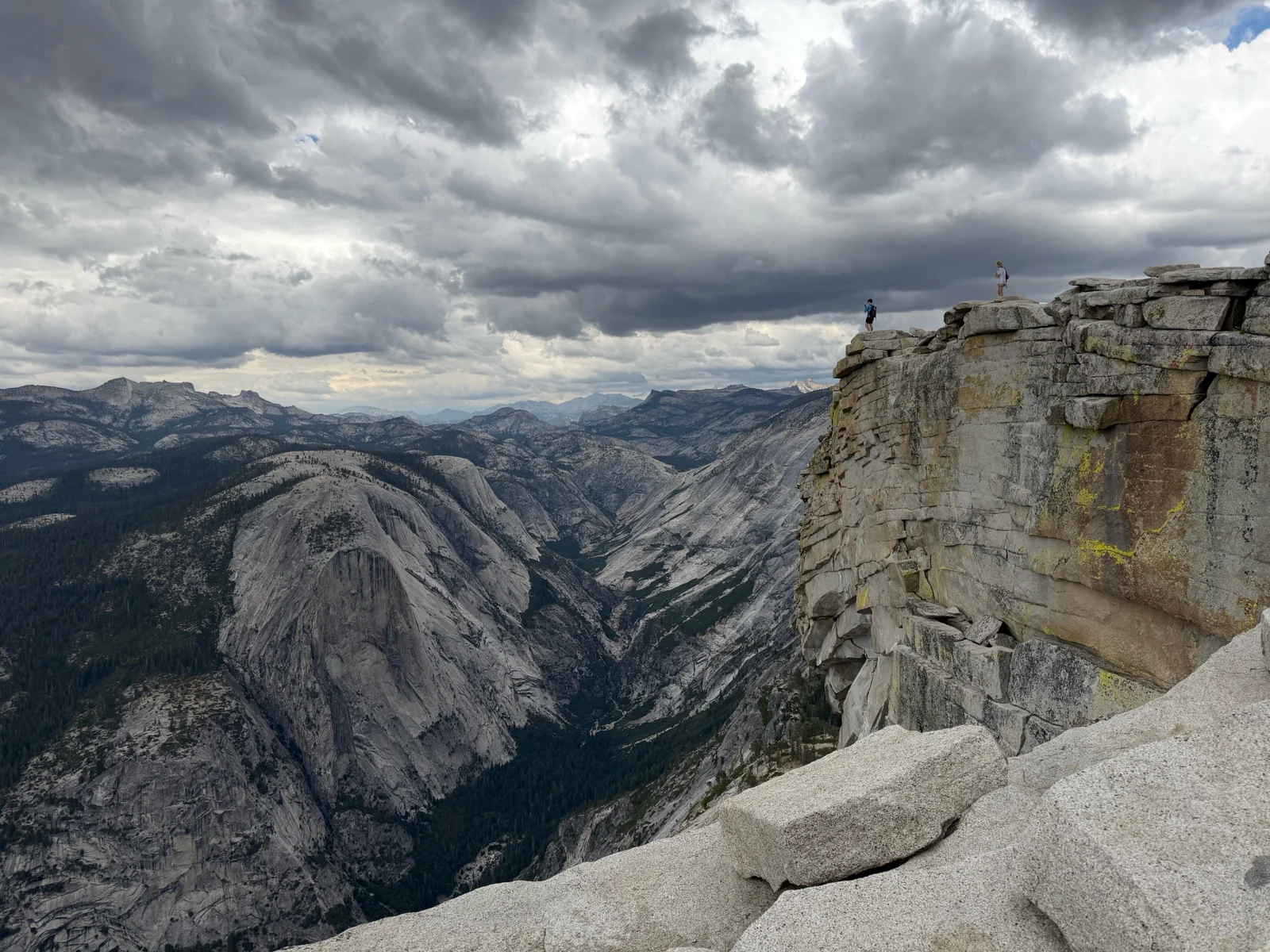
I had just started down the cables, barely past the gentler stretch near the summit, when I watched a rain cloud over Liberty Cap across the valley drift straight toward us.
A few minutes later the downpour hit, straight into my face, and I started shivering all over. Water began sheeting down the granite like a waterfall. All I dared to do was press close to the rock and keep my weight centered on the cable underfoot, watching the water break around my boots the way a stream splits around a stone.
I thought: this is bad. The steepest section hadn't even started. The people below were getting ready to keep descending, but I was the last one in line — at least three quarters of the way still lay below me, while going back up was only a quarter, much of it on gentler ground.
The summit meant lightning risk, but right then, continuing down meant a bigger risk of sliding off. I scrambled back up — my feet held, and I made it.
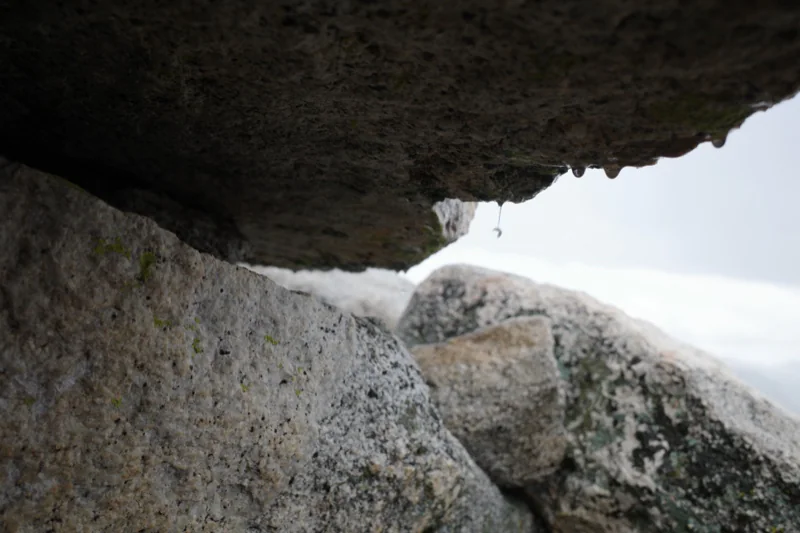
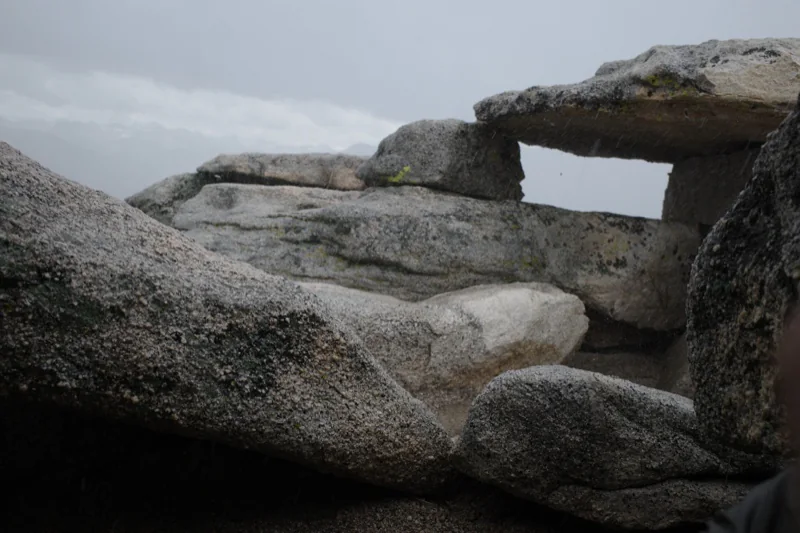
Back on top I quickly changed out of my T-shirt and shorts into a down jacket, then found a hollow under a boulder near the cliff edge at the very top of the dome and crawled in. It wasn't much of a space — curled up, most of me fit, barely, and half my body still caught the rain. I half-regretted changing into the only dry clothes I had: the damp fabric was now steadily steaming the heat out of my body.
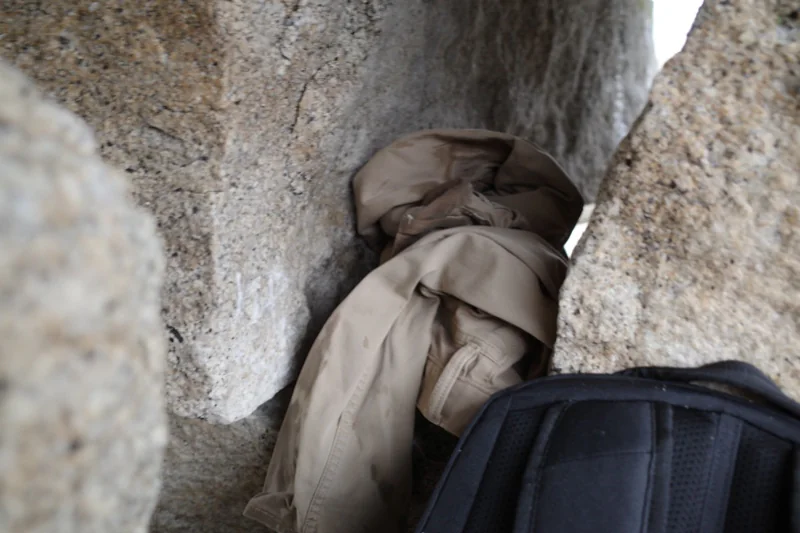
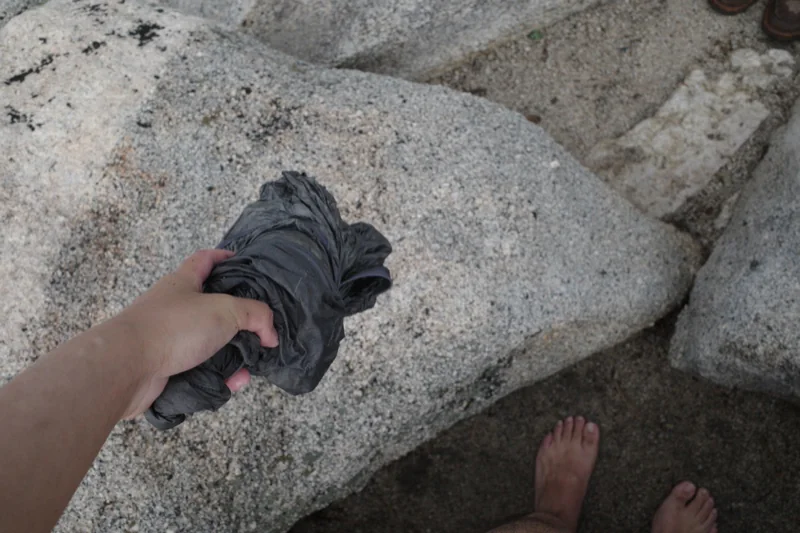
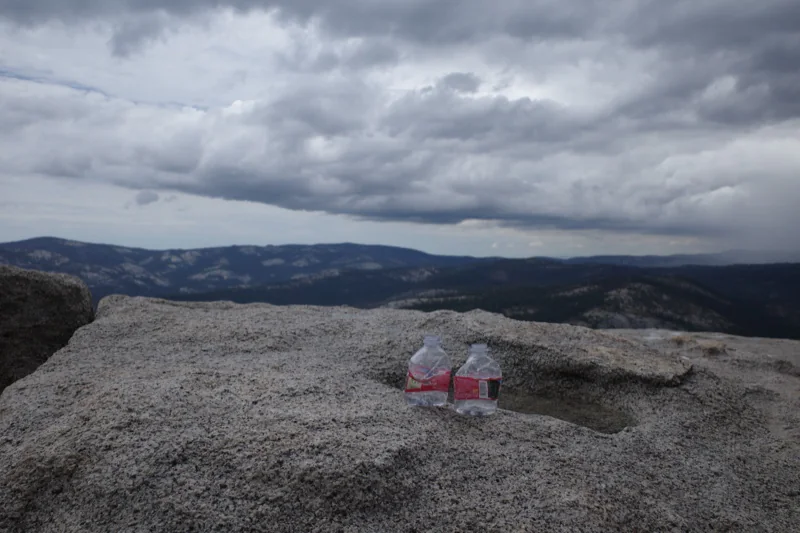
I took the wet clothes off and stashed them, together with the long pants I hadn't yet put on, in a dry spot deep in the rock crevice, and hid my backpack in there too. While scrambling for shelter I had dropped my big water bottle somewhere on the way; only two small ones were left, and I set them outside to collect rainwater.
To my surprise there was cell signal on the summit. I called 911 and asked about the forecast and the best window to descend. They checked with the park rangers but couldn't give a recommendation — I would have to use my own best judgement about whether the cables were safe.
Jul 13 15:45
The rain finally stopped. I pulled everything out, wrung the water out hard, and laid the clothes on the rocks to dry. I drank the rainwater from the bottles and noticed the hollows in the granite had pooled plenty of water — going thirsty, at least, wasn't a concern.
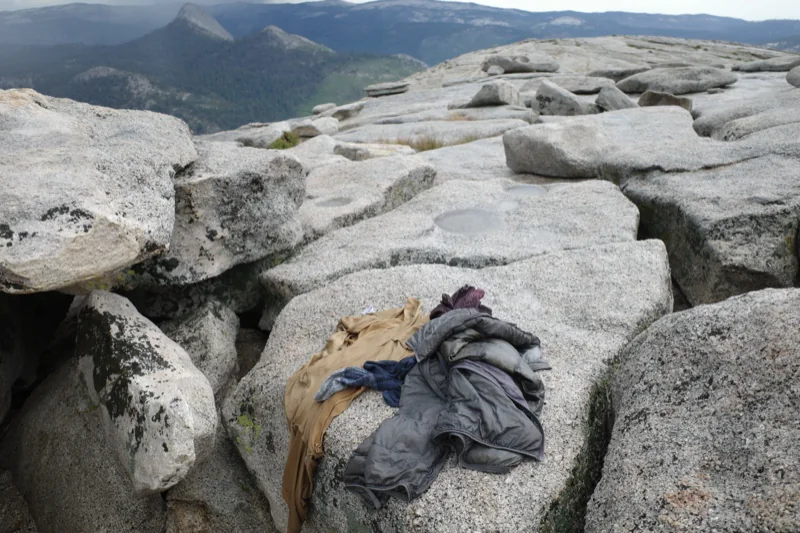
But over Liberty Cap in the distance, exactly like before on the cables, another mass of cloud was drifting this way — clearly just an intermission. I hurriedly stuffed the clothes back in, and sure enough, within fifteen minutes it was raining again.
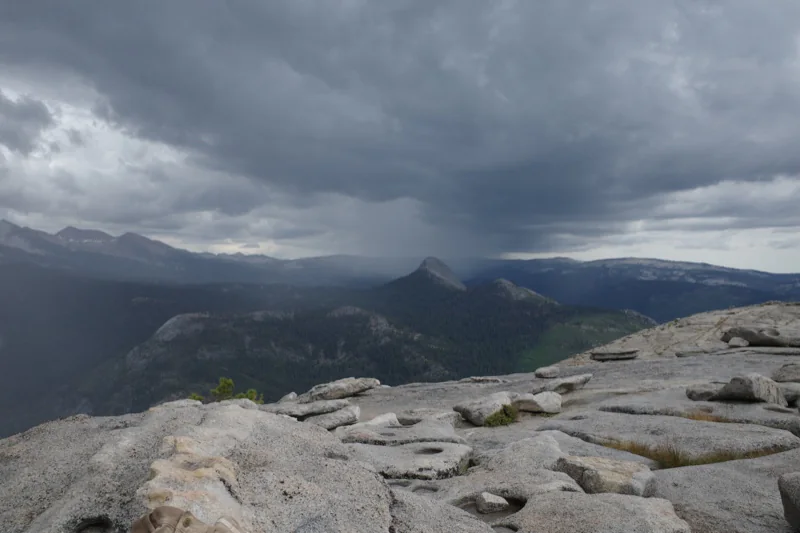
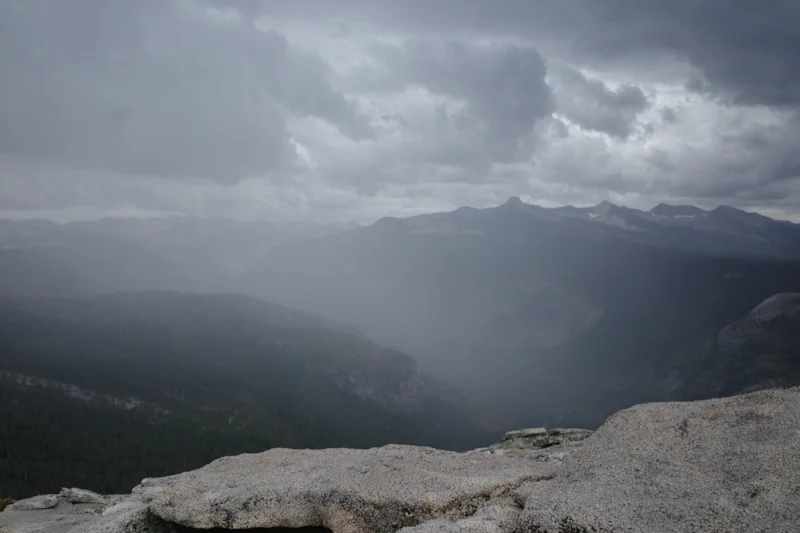
This rain lasted longer — a downpour with thunder in it. I curled up under the rock, my white shorts spread on the sand beneath me, watching the water creep up little by little into a small pond. I took my boots off too and tucked them under the rock.
Jul 13 16:30
The rain stopped at last, and I watched the storm cell recede toward Clouds Rest behind me. The clouds overhead thinned and let sunlight through; I put the wrung-out down jacket back on and felt much warmer.
I had taken my socks off earlier because of the standing water. Walking barefoot over rock strewn with sharp little gravel hurt, but the patches of granite that were drying out actually wicked the moisture off my soles.
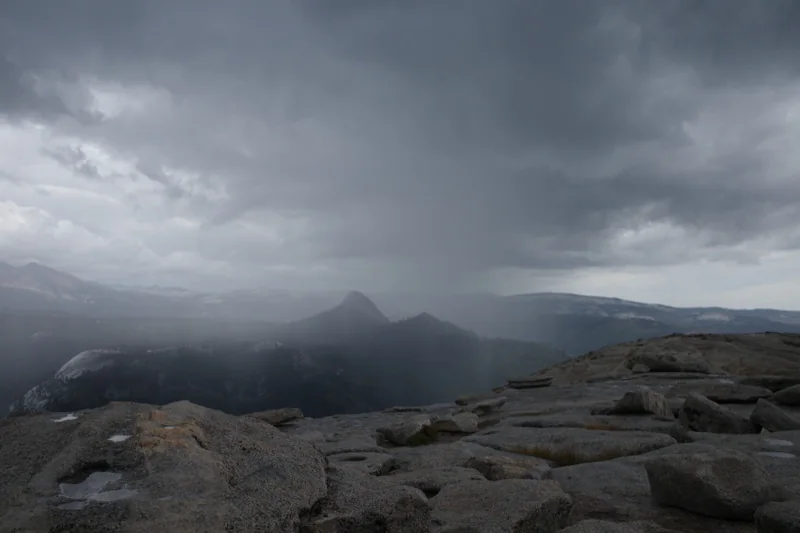
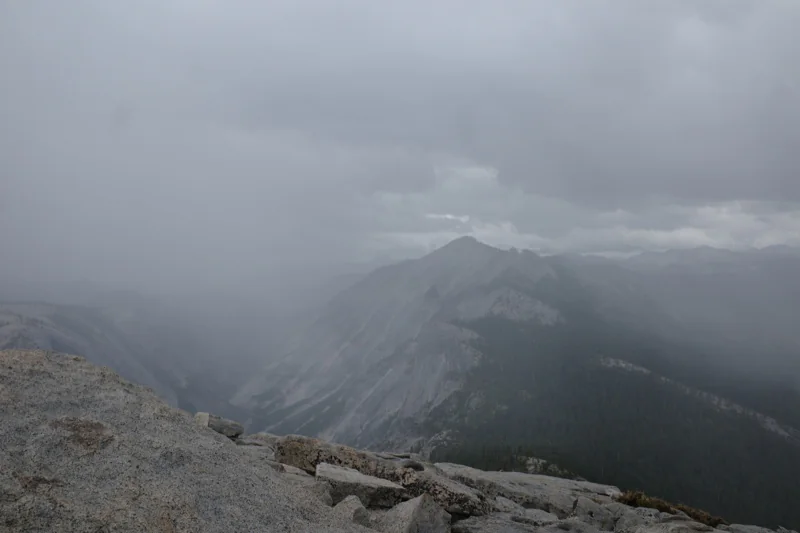
On the way up I had half-regretted not leaving my pack at the subdome below like everyone else — hauling the weight up cost real effort. Now I was deeply glad: food, water bottles, the down jacket, long pants, a flashlight, and four power banks were all with me.
Checking my phone, I was surprised to find a Luma event notification had come through — the summit signal was good enough for mobile data. My first instinct was to ask ChatGPT for the best window to get down.
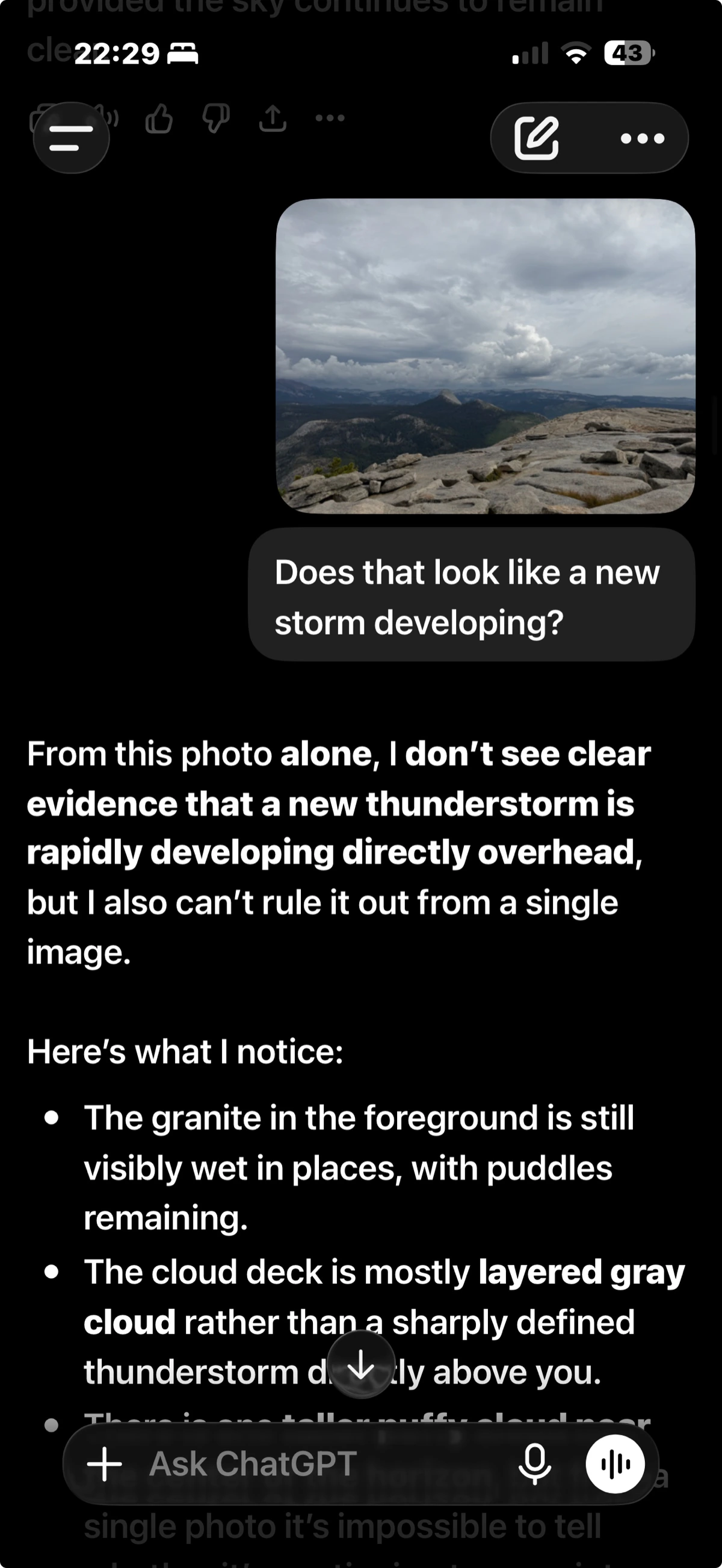
GPT said the best window was 20 to 60 minutes out — if another thunderstorm came, staying on the summit meant lightning risk. But the rock around me still felt distinctly damp.
Watching carefully, all the rain clouds seemed to be blowing in from the northwest; a photo of them meant nothing to GPT either. Staring hard, one small patch under the cloud bank at the horizon looked opaque — maybe rain falling there — but even if it was coming, it seemed some time away.
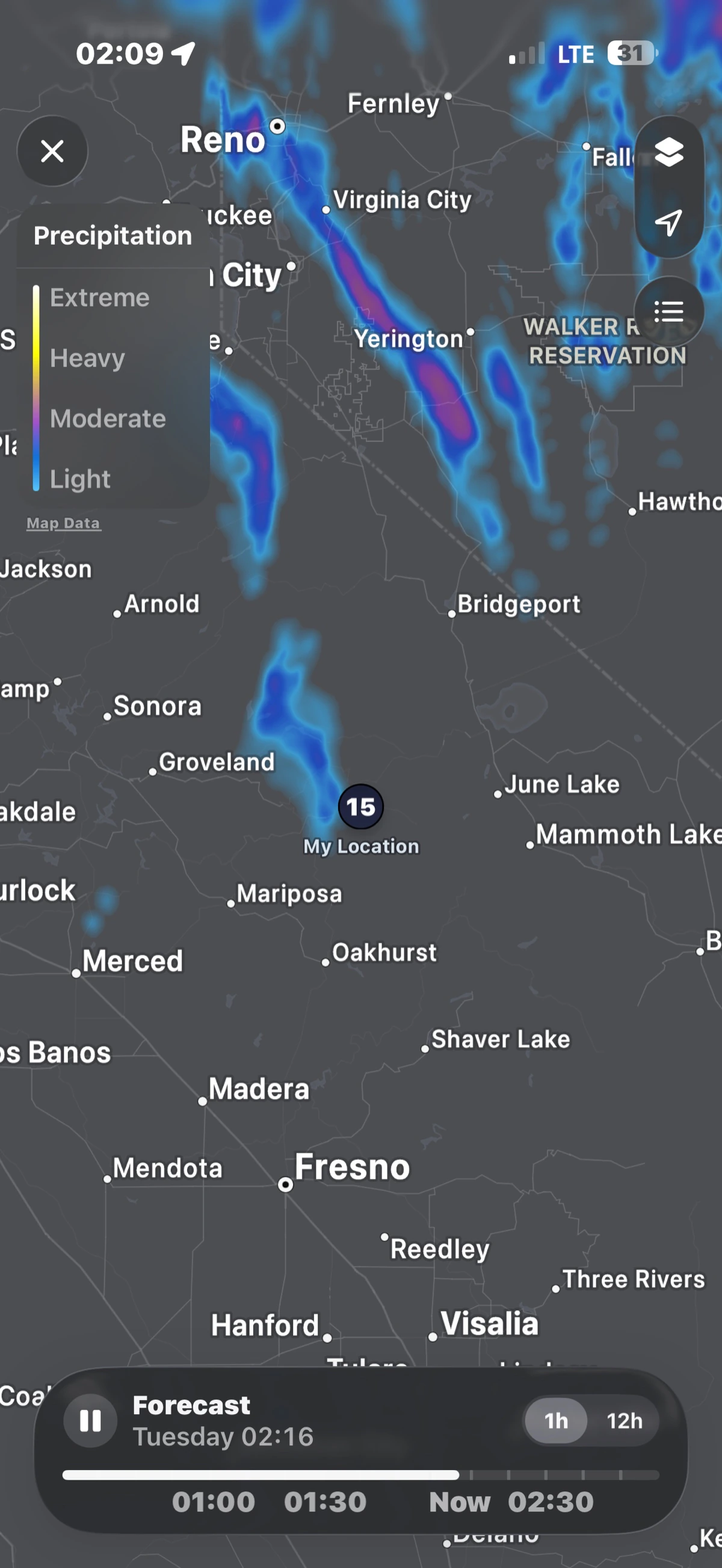
The precipitation forecast on Windy suggested the whole storm had passed; whatever rain remained would be much weaker.
Reality soon proved me wrong. Summer storms in the Sierra materialize out of nothing in a matter of tens of minutes. Soon enough, the small opaque patch I'd barely made out really was a rain cloud, and it was heading straight for me. The script was almost identical: around 5:15, by the time the cloud reached Liberty Cap it had already grown into an enormous curtain of rain, and within fifteen minutes it was raining on me again.
My mood turned grim. Windy now showed rain until 6, maybe not stopping until 7. Sunset was at 8:20 — if the rain ended past 7, then counting the time for the rock face to dry, there likely wasn't enough daylight left to get down, and downclimbing in the dark was absolutely out of the question. I began to regret not trying to descend a little past 5; in hindsight, that seemed to have been the day's only window.
I no longer felt like taking pictures; I just sat. Then, as if out of a daze, I heard voices — three people walking toward me, carrying climbing ropes and hardware. They must have come up during that break in the rain.
I asked if they had a spare rope to lend me. They said yes — but I had no harness to fix the rope to properly.
I asked when they planned to head down. Right away, they said — it gets cold fast after sunset. It was still raining, though not as hard as when I'd been on the face at 2.
I thought it over: in a real fall, a body swinging on a rope could slam into the face or tangle in the cables on either side. The rope guaranteed nothing. I decided to stay on the summit.
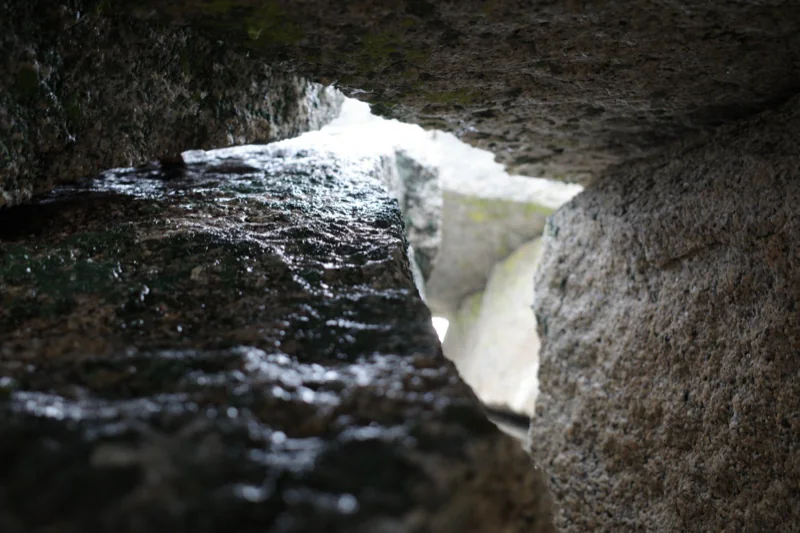
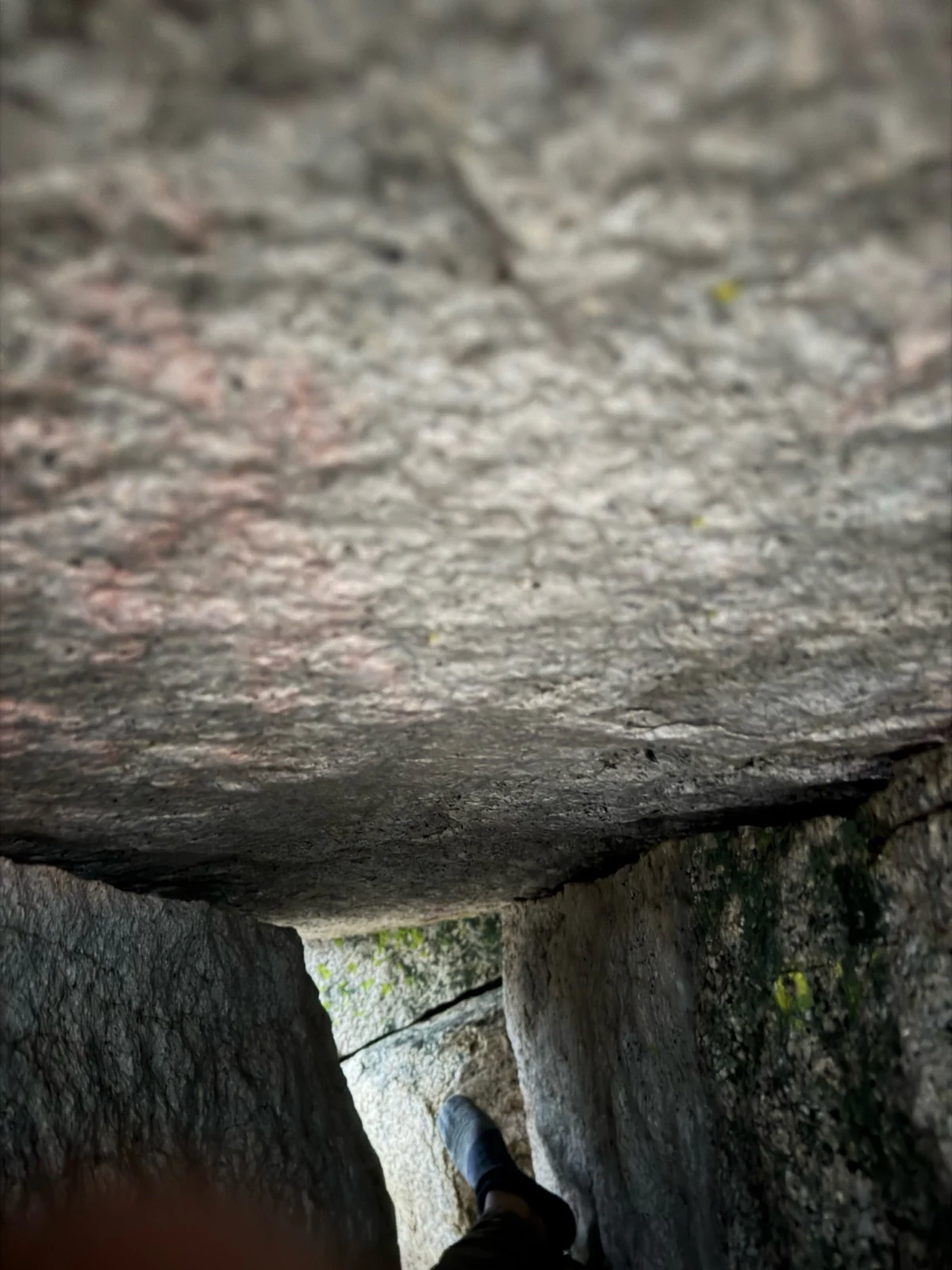
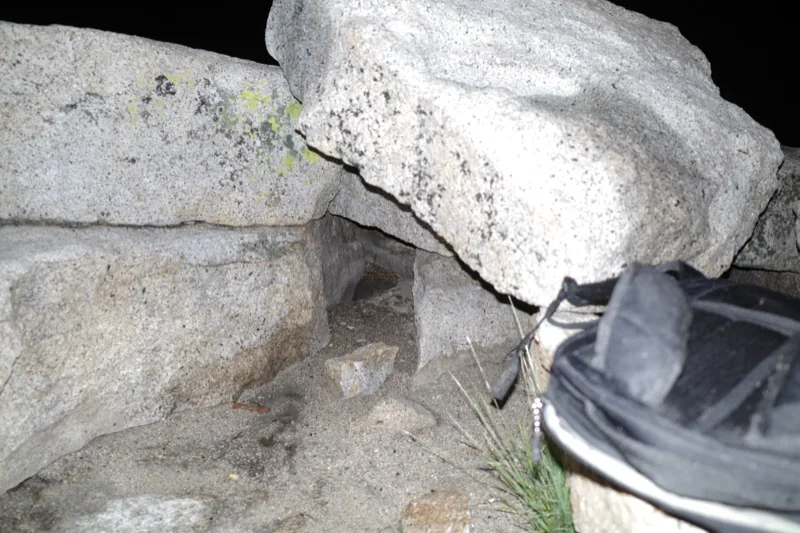
The rain was lighter than at 4, but the wind had swung around to the north, and the space under the rock no longer kept it out. I moved to the other side of the boulders. The gap between them was actually a neat, sharply triangular passage, its floor split by two slabs — slightly wider at the south end, and so narrow at the north that I could barely squeeze through. Because it ran clear through, there was nothing to block the north wind. My thin down jacket, though wrung out once already, was still ice-cold and damp, and each gust set my whole body shaking. I worked myself deeper into the hole and sat hunched over facing inward, in an utterly undignified position that blocked some of the wind, barely.
It suddenly occurred to me that I could probably curl up and lie inside this hole. This, perhaps, was where I'd be spending the night.
Jul 13 19:00
The rain finally stopped. The clouds stayed thick, the sun never came out, the air was still heavy with post-rain damp, and stray drops kept drifting down.
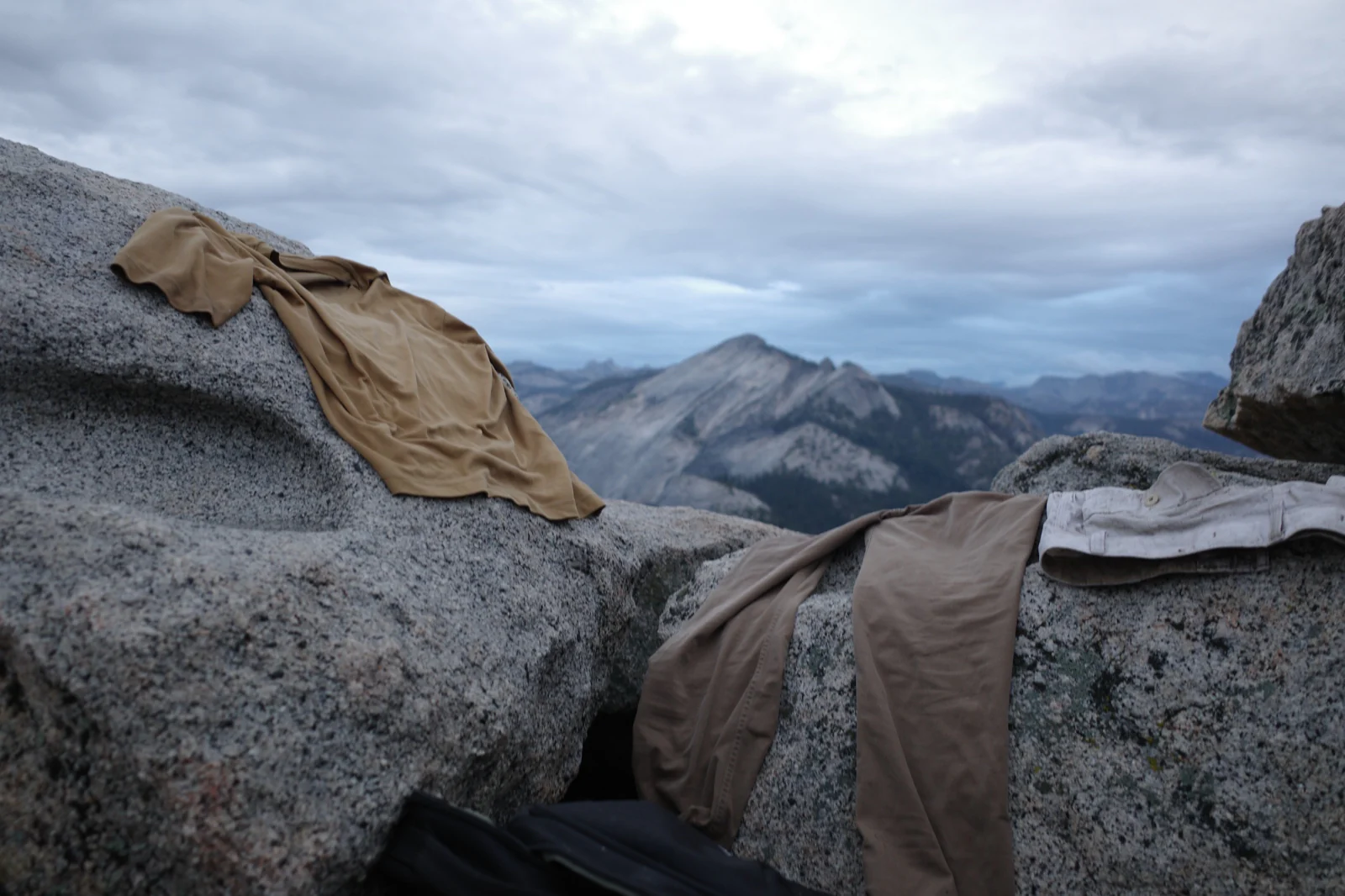
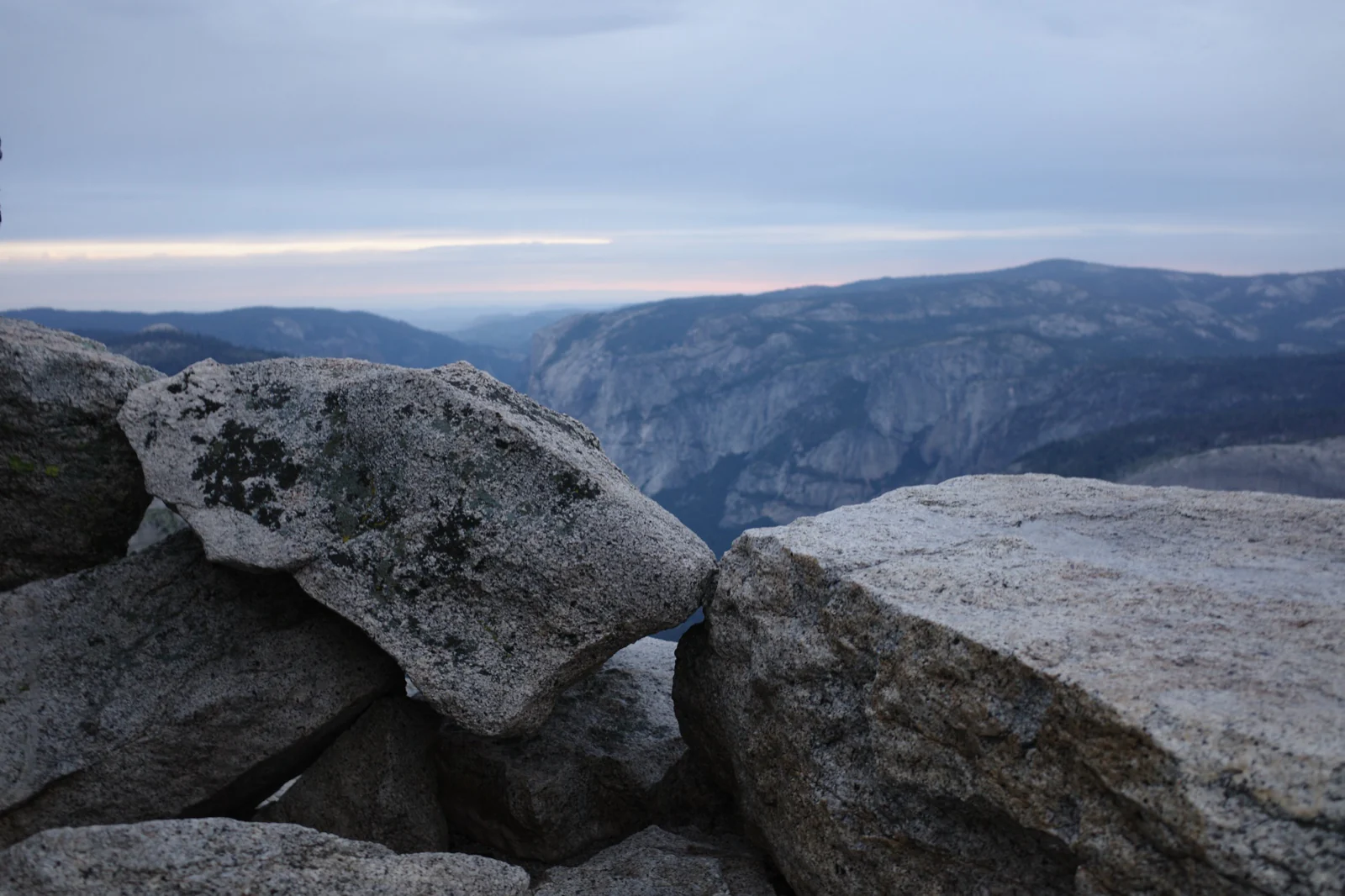
Only about twenty minutes later, at 7:23, I walked over to try the cables. Water was no longer running down them, but they were still very wet, and the granite was still the dark shade of rock that has drunk in water.
I climbed down to near where I'd turned back before, to feel it out. My feet didn't grip as surely as they should. Even with three points of contact, if one slips, your whole weight loads onto the other two — and past the critical point where sliding starts, friction gives you far less resistance. The smallest slip would turn into a free fall of a hundred-some meters.
I decided that however cold the night got, I was staying on the summit.
Jul 13 20:20
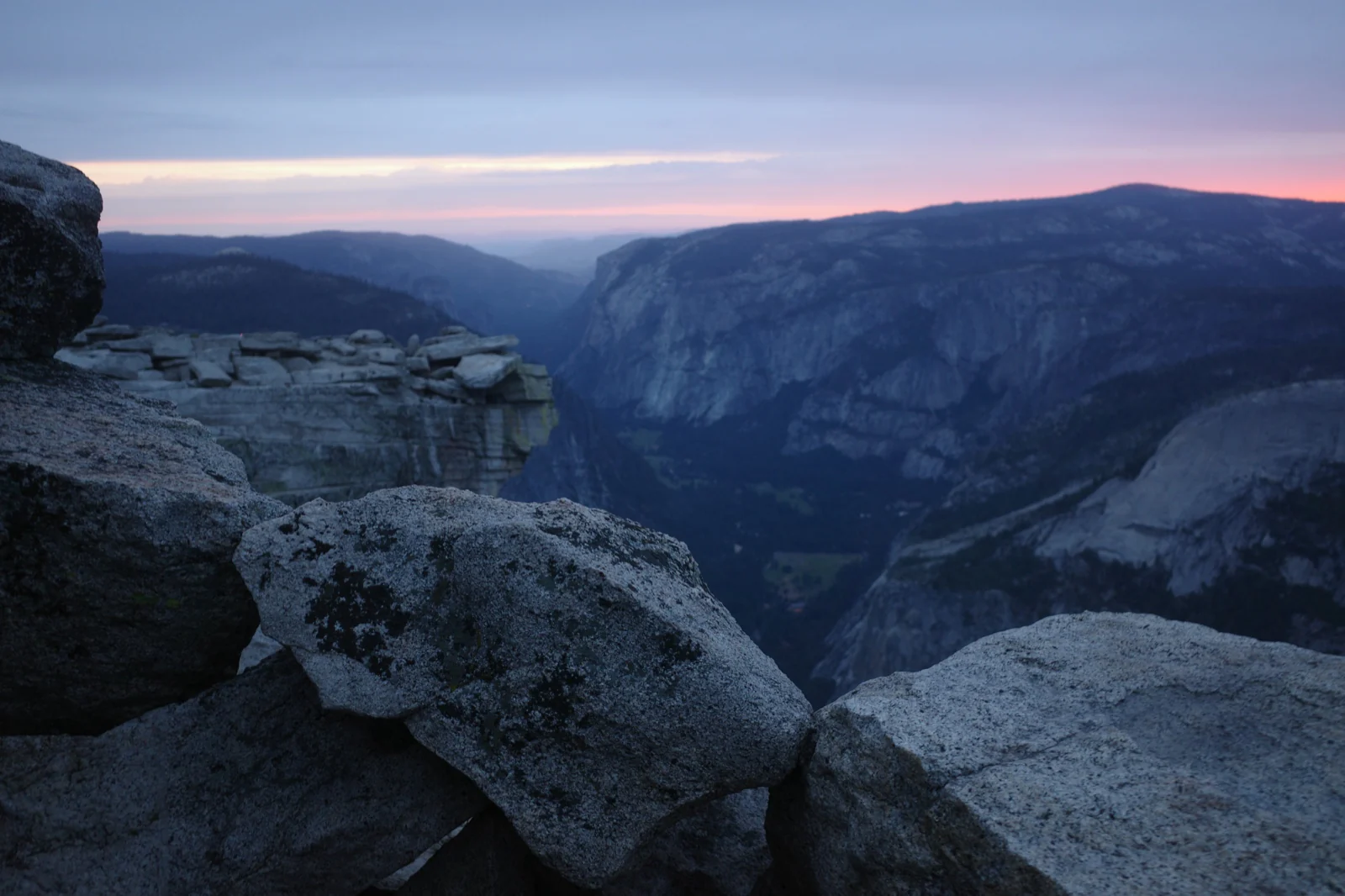
At sunset the sun still hadn't shown; the horizon only blushed faintly pink. The whole valley lay under a thin blue haze, sunk in a kind of stillness.
I stowed my things under a rock out of the rain, put the backpack behind my back for padding, and lay down inside the hole. The slabs of the floor weren't joined — it felt like sleeping across two chairs set slightly apart, and I had to keep holding my own weight with my hips, legs, or back; fully relaxing was impossible. But this corner was probably the only spot on the whole summit completely sheltered from wind and rain. The forecast said a low of 13°C overnight, with rain still possible; I hoped to steam the damp off my body before the deep-night cold set in.
I called 911 again and told them I wasn't coming down tonight. After confirming I had food, water, a flashlight, and battery power, and no medical history to worry about, they said it would be a tough night — but that I had made the right call.
It wasn't fully dark yet. I closed my eyes in the crevice and dozed for a while, but real sleep was impossible. My body had dried out a lot, but the soles of my feet were still wet, and cold wind kept pouring in from the other end.
I had to keep turning over to give the strained muscles a rest. The rock beneath was really only wide enough to lie on my side; lying flat left one arm hanging in the air. The backpack was wet, so each time I rolled onto my side, the cold soaked instantly through my back.
Time crawled. Every time I checked my phone, only another hour had passed — and from sunset at 8:20 to sunrise at 5:40 stretched a full nine-plus hours.
Around midnight, just as the forecast said, a light rain came. Drops landed on my face; I pressed myself deeper into the hole, only for the wind to catch me from the other end.
Past 1 a.m., the shivering had weakened a lot — but I wasn't warming up. Afraid this was the onset of hypothermia, I decided to eat something.
I put my glasses on and found the sky overhead crowded with enormous stars. I prayed they wouldn't disappear — if they held, morning would bring good weather.
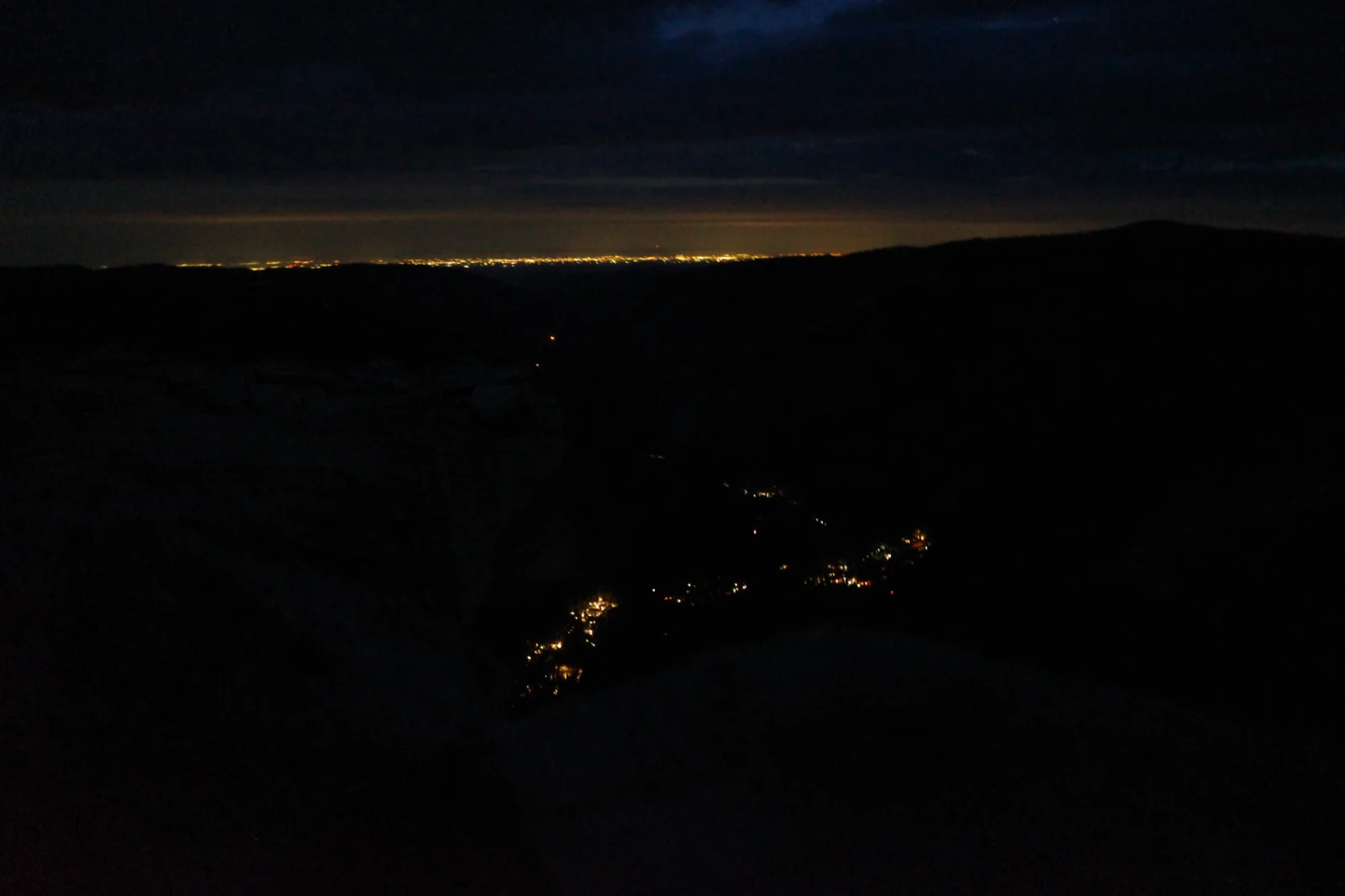
Toward Yosemite Valley I could see scattered lights, and far off, the lights along the California coast ran together into a single glow. Civilization was within arm's reach — yet up here on the summit, there was only what one person could do alone.
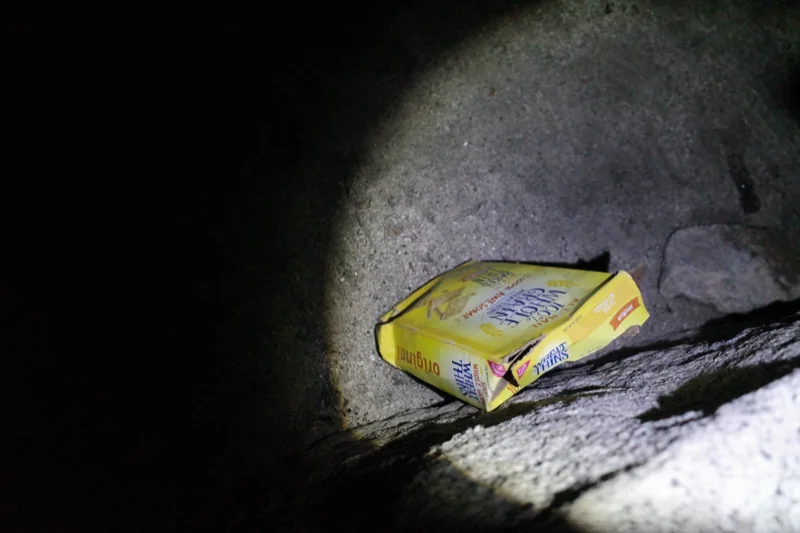
The pack still held crackers, beef, and chocolate bars. A crushed chocolate pie had gone soggy and smeared the whole bottom of the bag, so I moved my clothes into the black plastic bag that had held the food. The crackers and beef had been reduced to nothing but sweetness and saltiness, and I didn't feel especially hungry, but I washed most of the bag down with rainwater.
My body was almost completely dry now. After eating I pulled my boots back on and gave up on lying in the hole; I just sat at its mouth, keeping as low as I could out of the wind.
July 14 4:30 AM
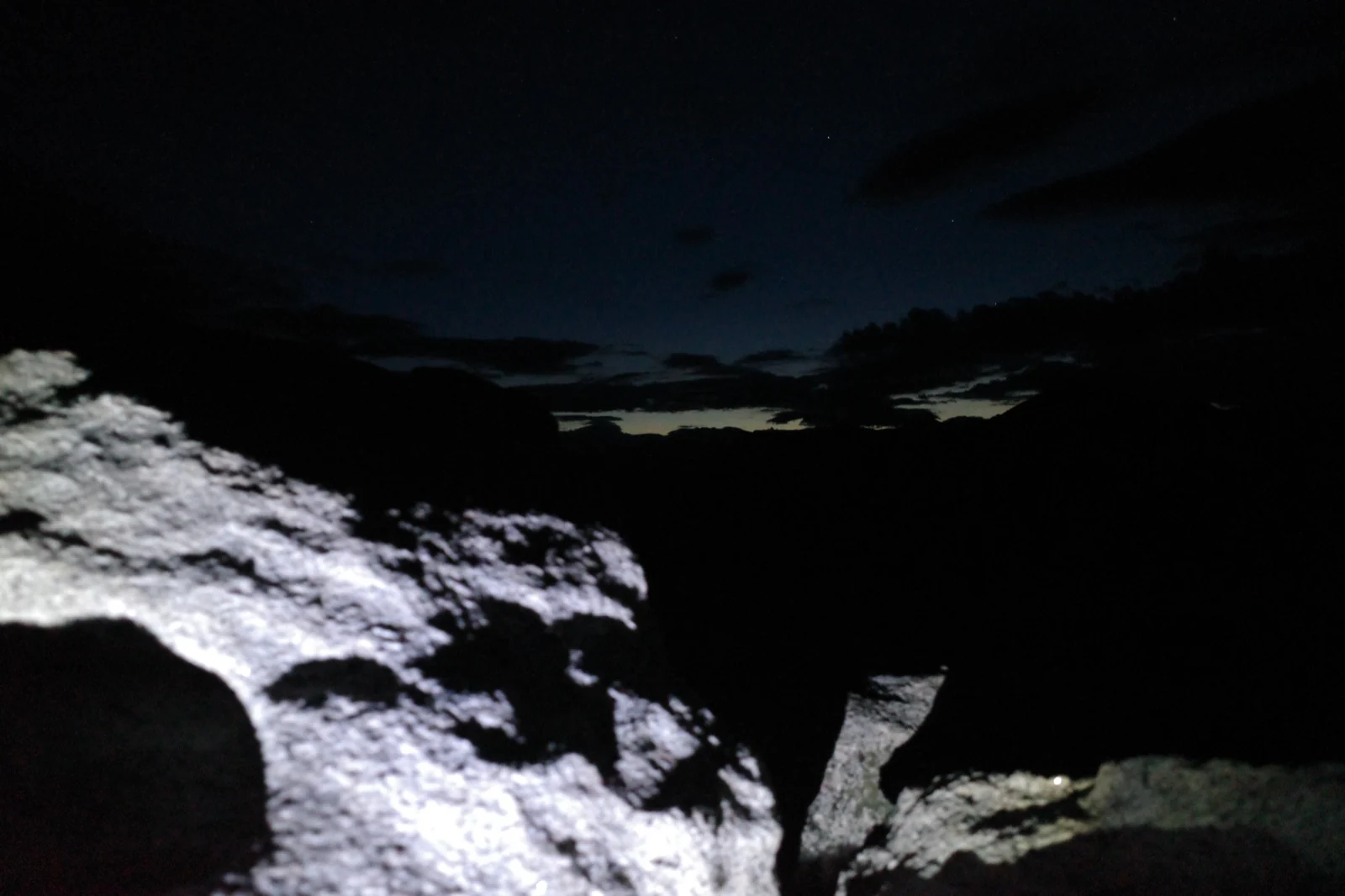
At 4:30 the eastern sky began to lighten. The ranges were still just silhouettes, and there was plenty of cloud — but you could already tell it would at least be a clear day.
Around 5 I spotted a flashlight on the ridge over by North Dome. I tried signaling by switching mine on and off. They seemed to see it — and signaled back.
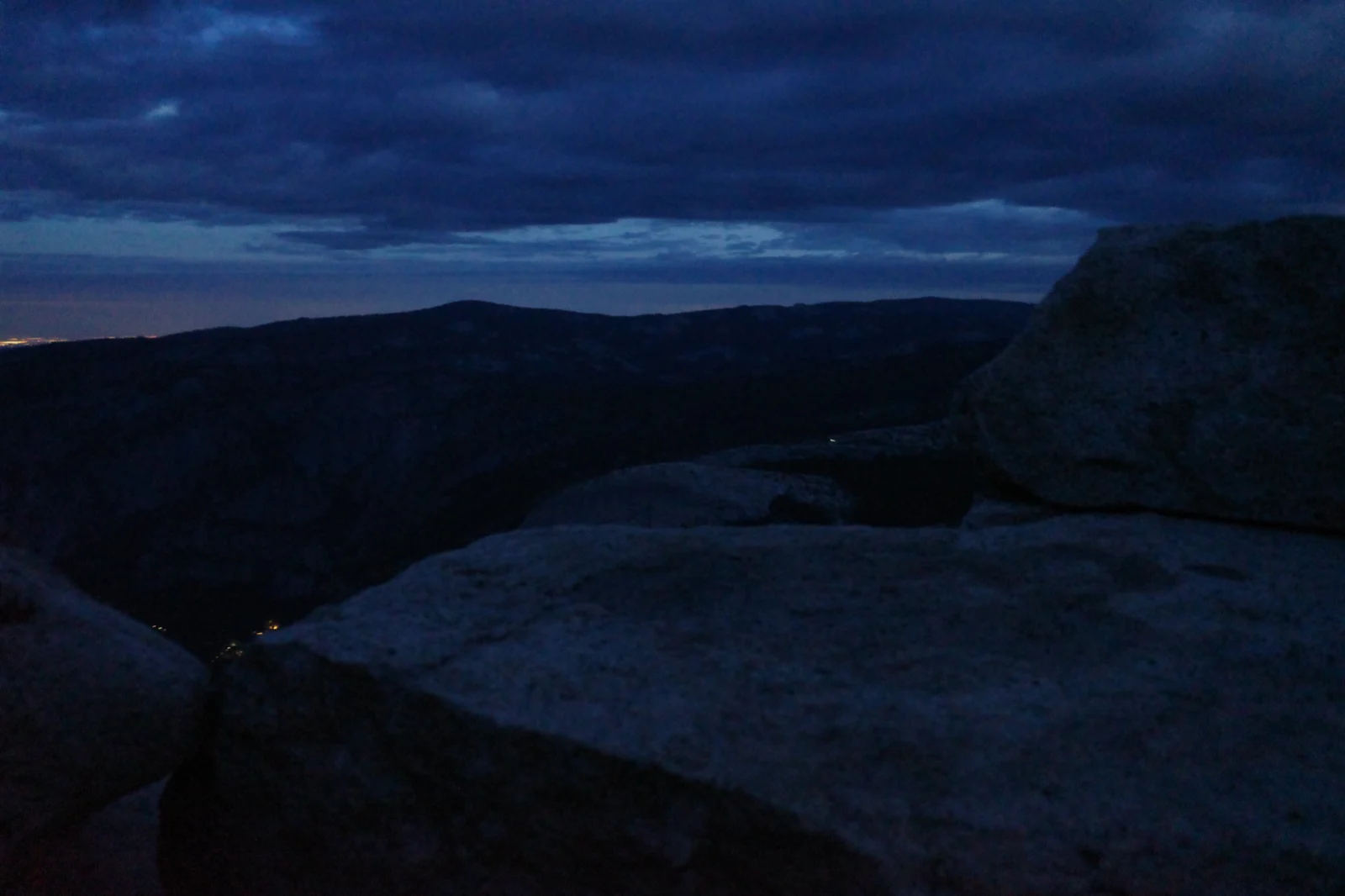
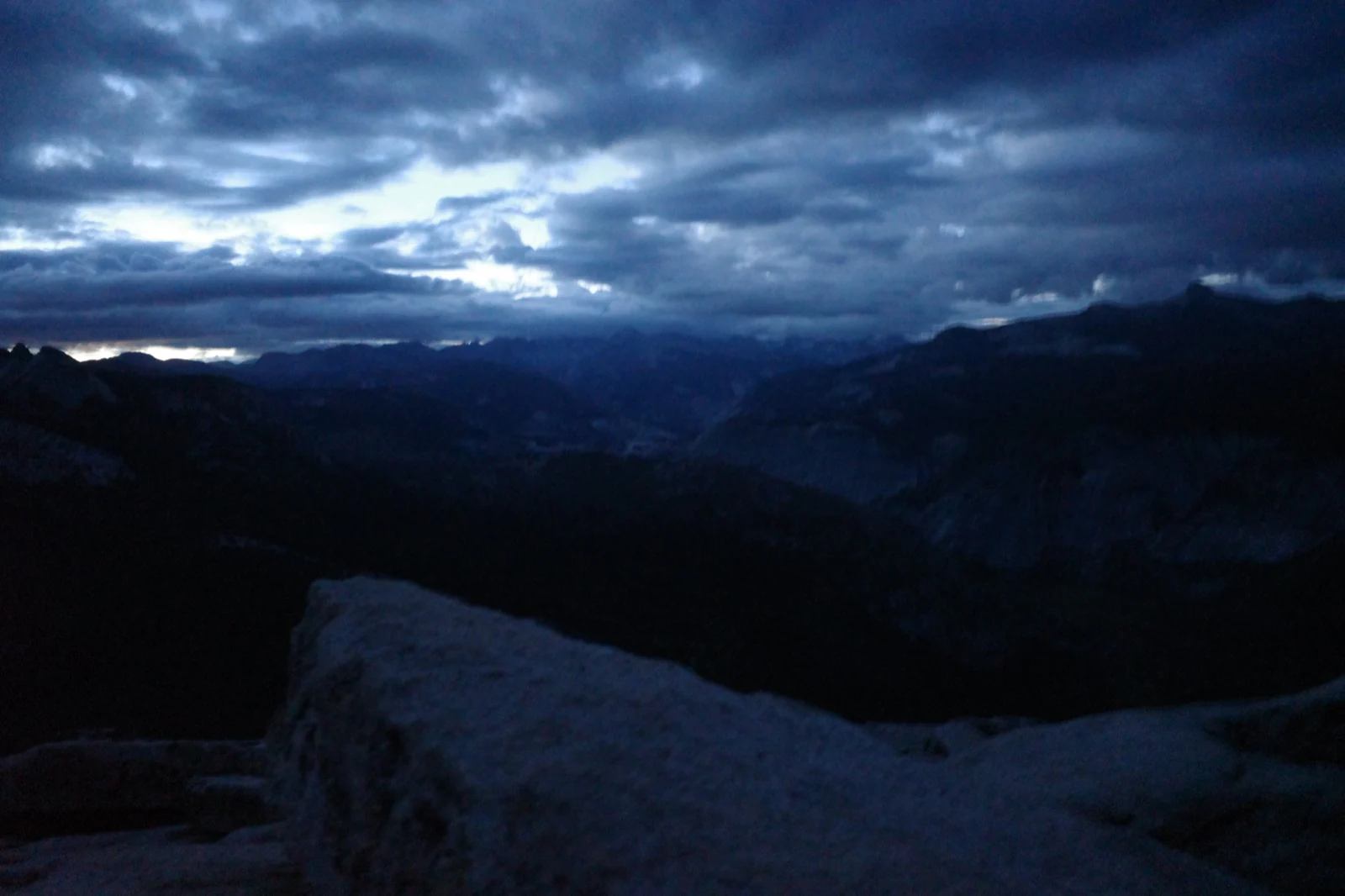
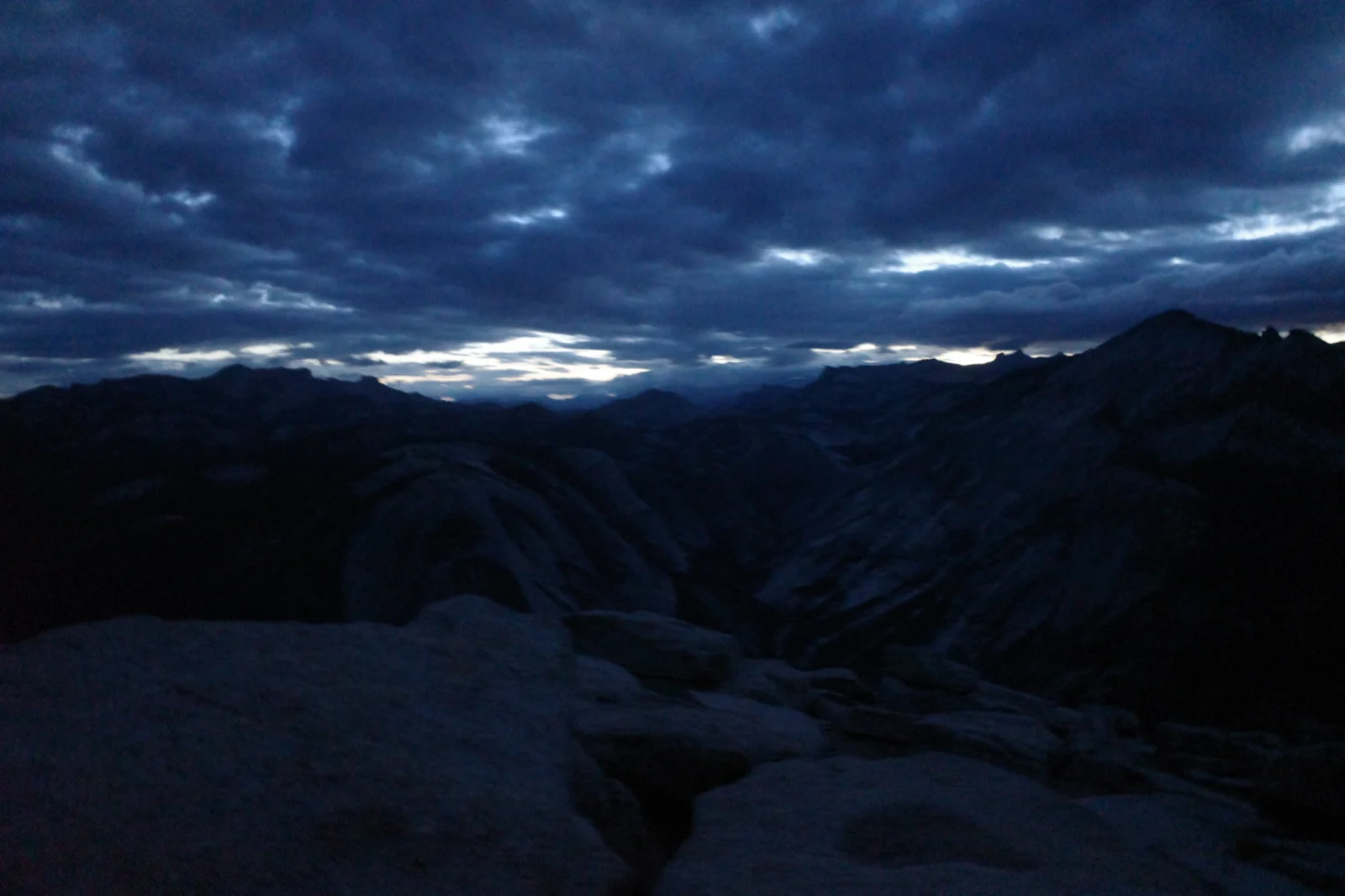
The whole canyon was visible now, and in the darkness it was overwhelmingly magnificent.
Imagining the glaciers that carved this landscape, it suddenly struck me how laughable the idea of conquering nature really is. Outside civilization, alone, all a person can actually do is use their own head to maximize the probability of survival — nothing more.
July 14 5:55 AM
Sunrise came at last, and with it voices nearby — six or seven people. I asked how the rock face was. "Not too bad," they said.
When they learned I'd spent the night up there, they were stunned. One of them looked at my clothes drying on the rocks and said, "You're a trooper." He took a photo of me and said, "Now you have had a good look of the valley." I said, "I'll remember on my death bed."
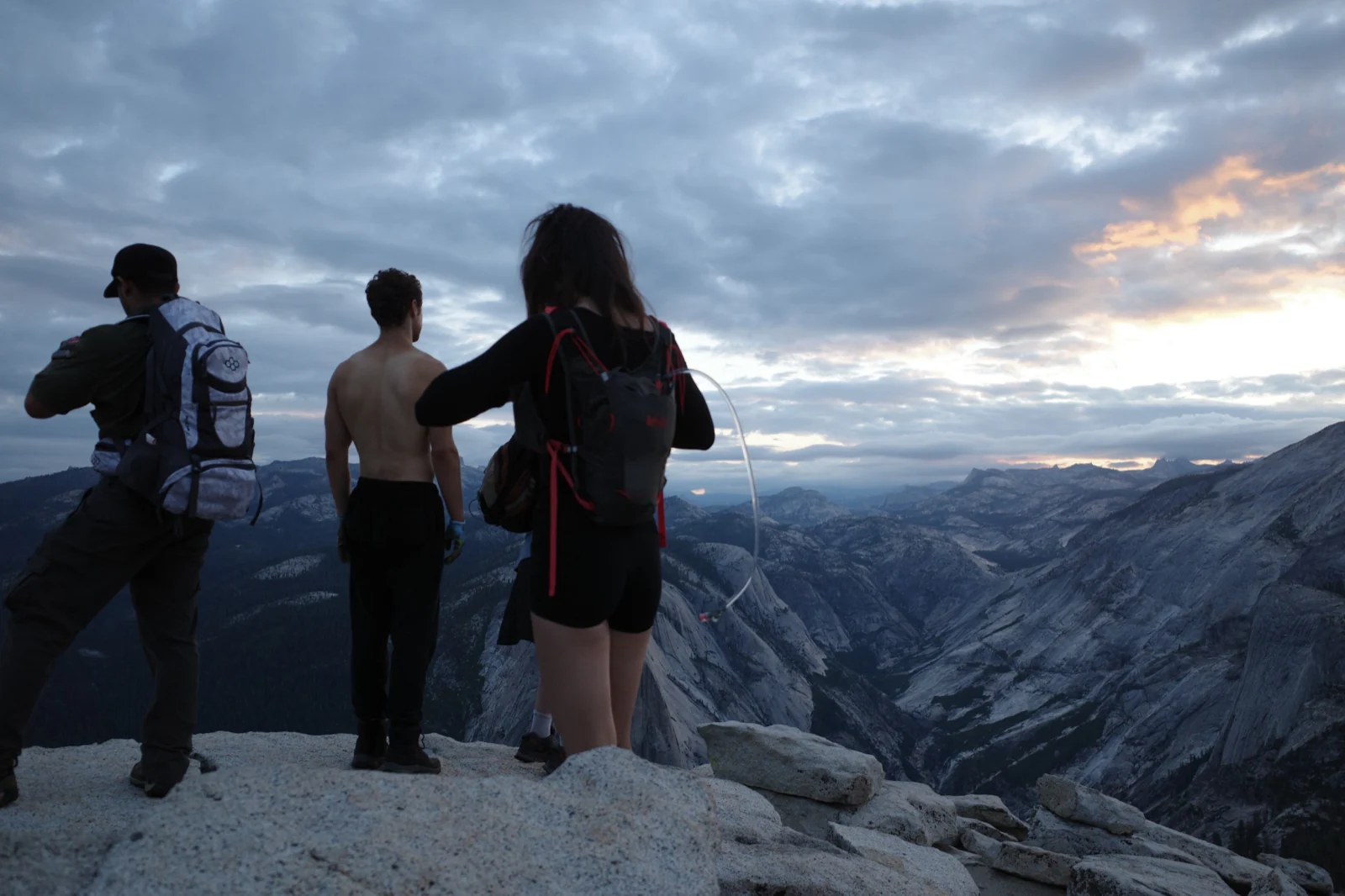
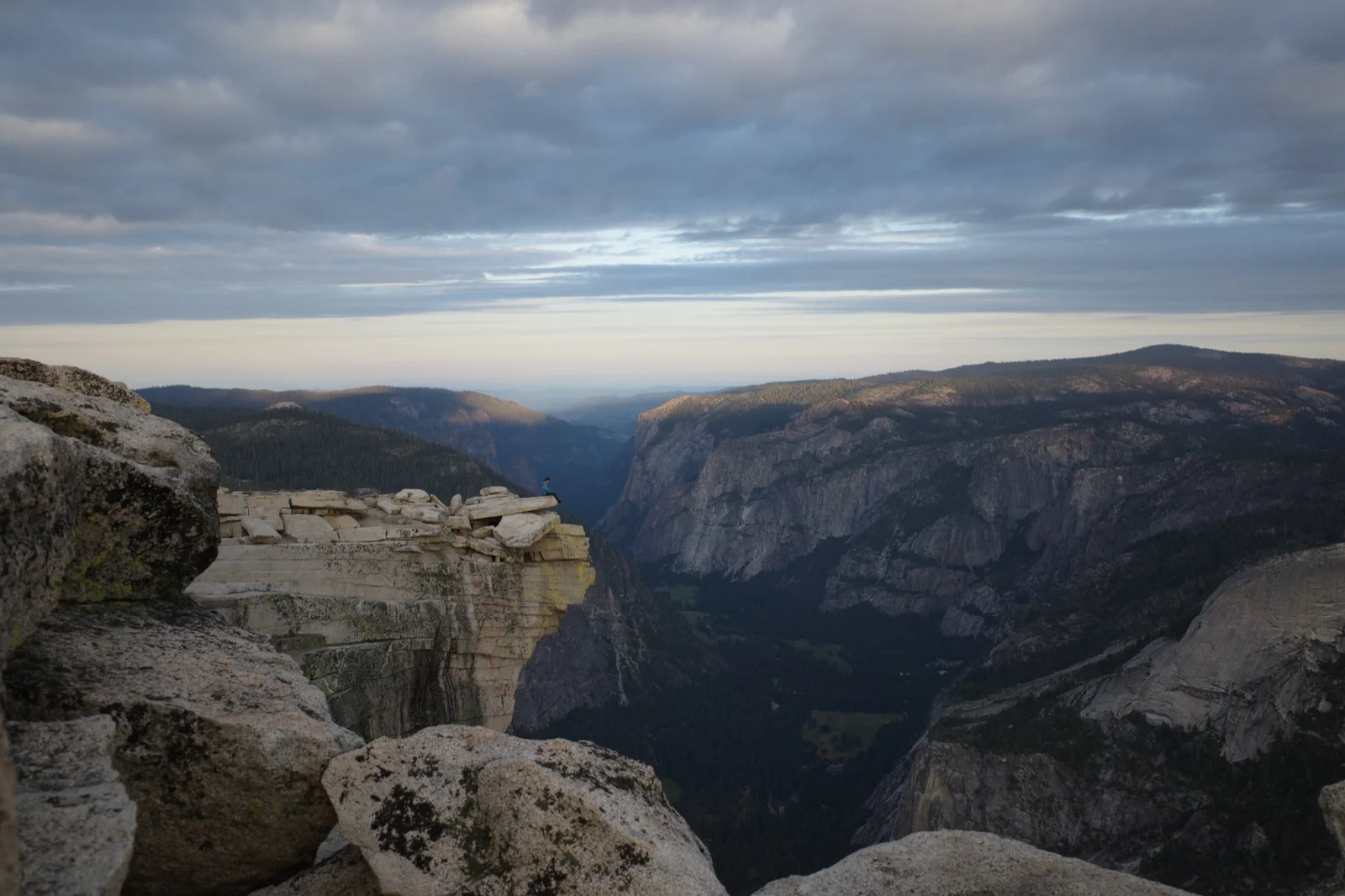
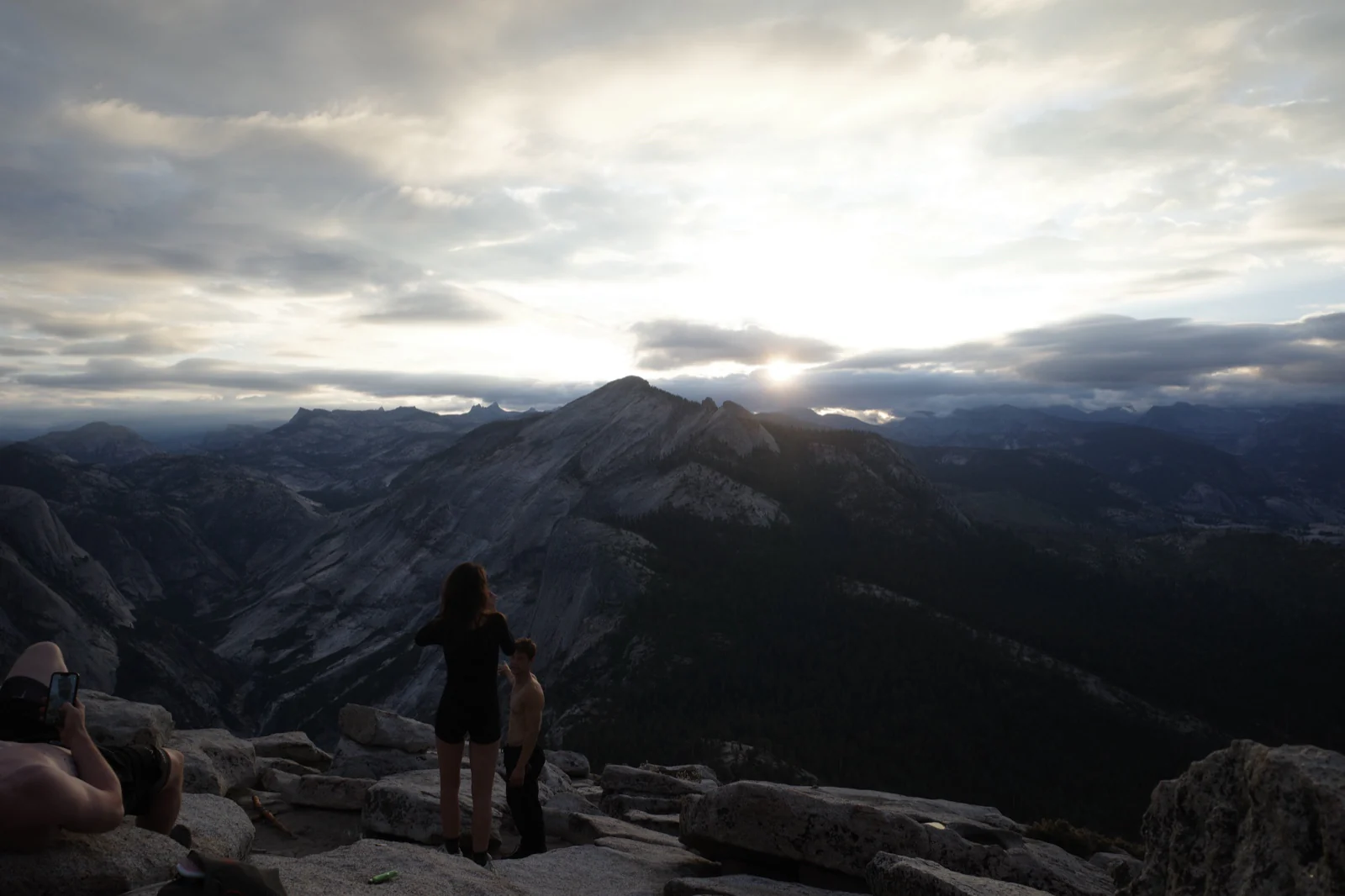
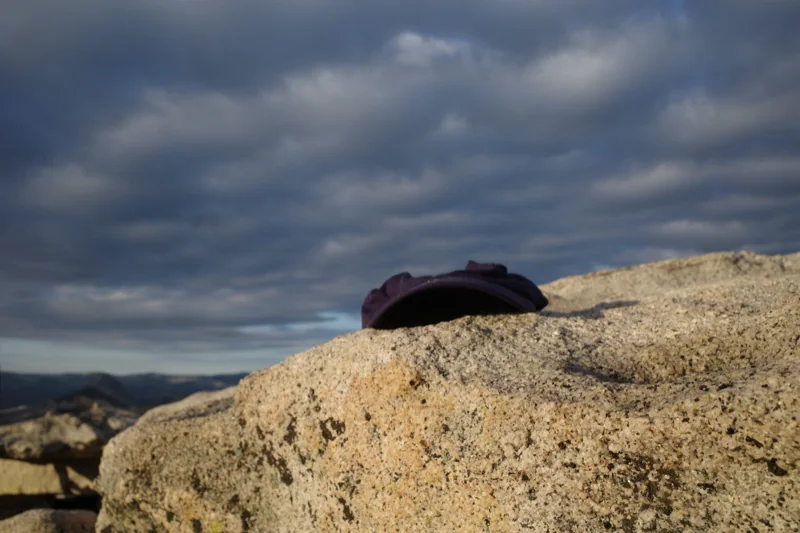
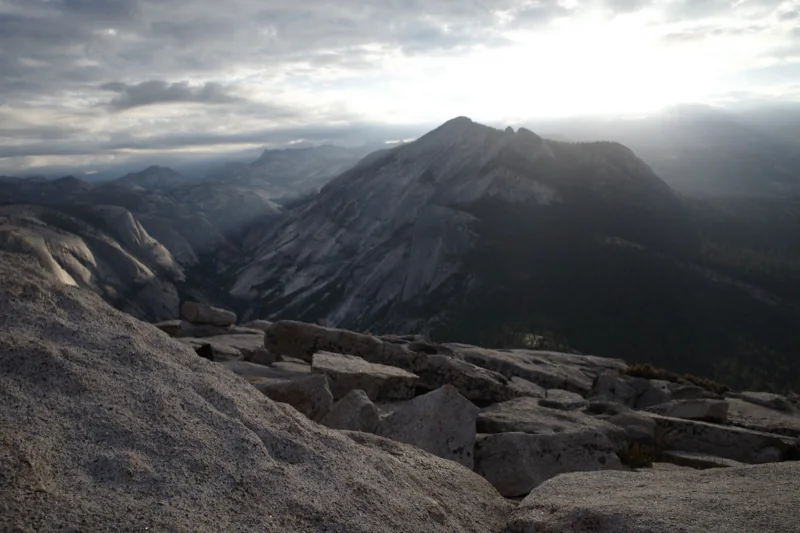
They lent me a down jacket and gloves, and once I'd warmed up we started down together, around 7.
The rock had dried almost completely and felt more solid than I expected. Only a few spots stayed wet where water still ran — and the wet spots really were slick. Going down is actually more harrowing than going up. I faced the wall and fought to keep three points of contact the whole way; it took a good thirty-plus minutes. I was very glad I hadn't forced a descent on wet granite the day before.
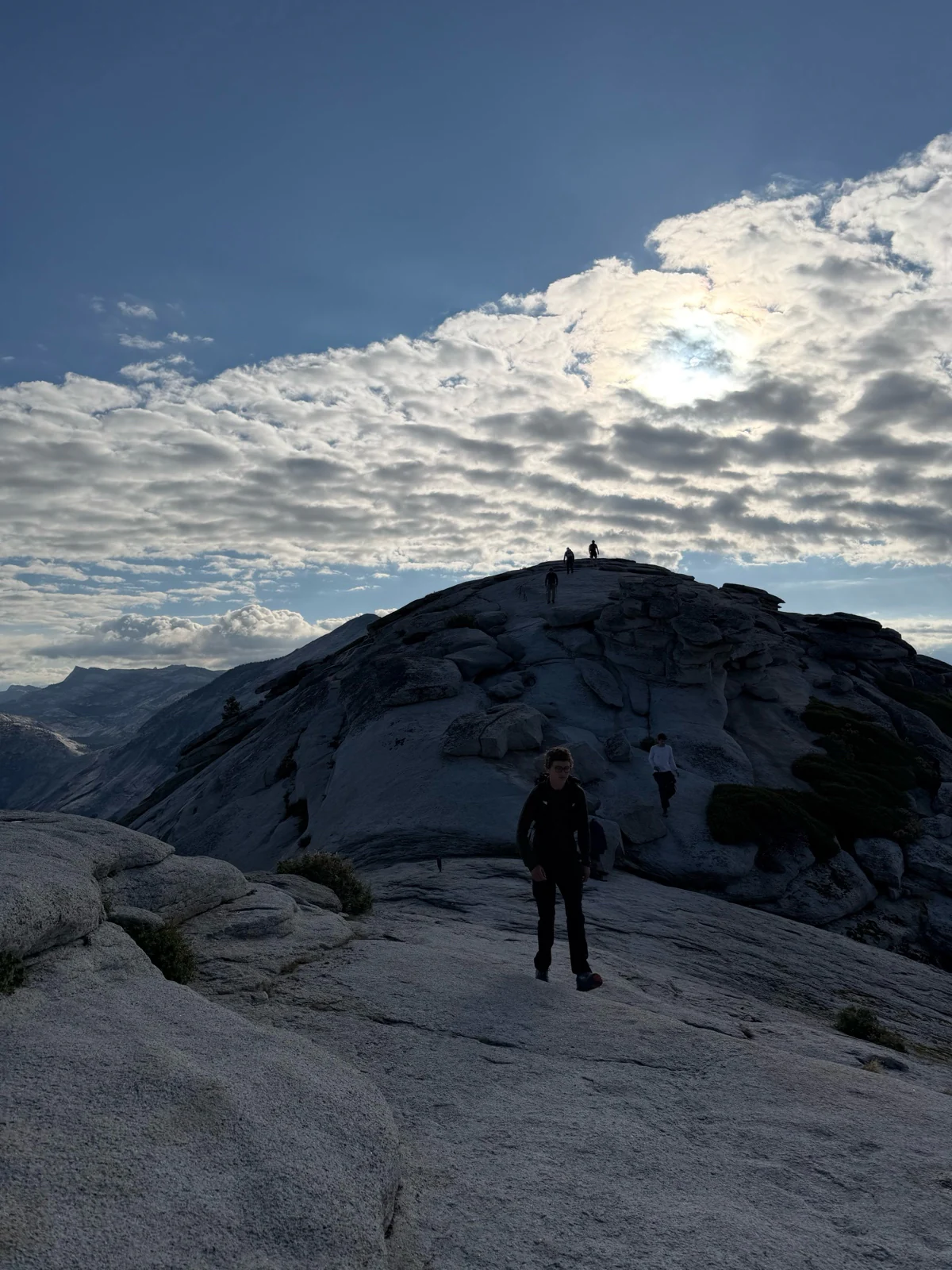
The walk back to Yosemite Valley was 17.5 km. A warm-hearted Iranian doctor and his family gave me water, food, coffee, spare medicine, band-aids — even socks. An Iranian, he said, cannot see someone who needs help and not reach out.
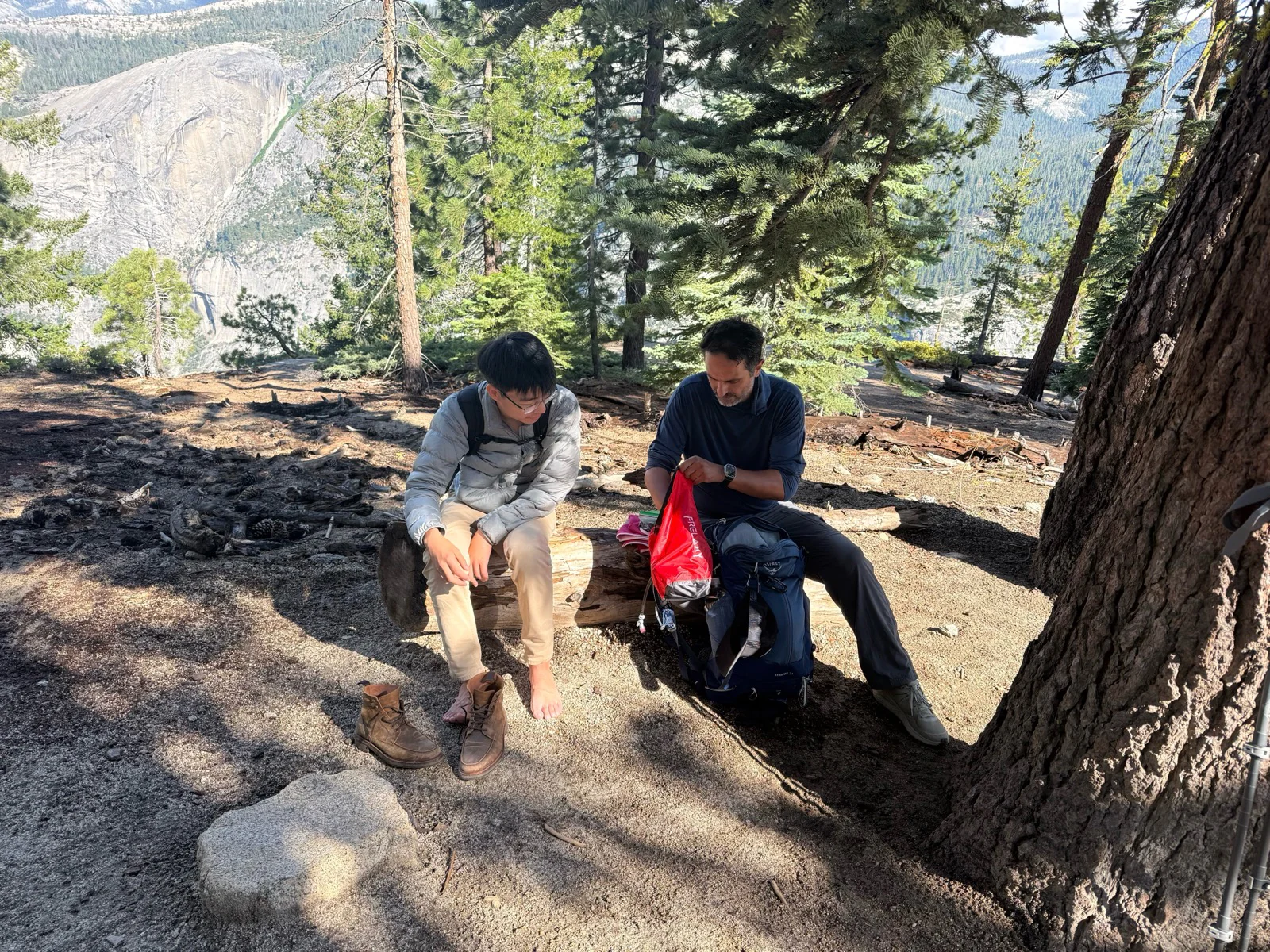
After the thousand-plus stone steps down past Nevada Fall and Vernal Fall, I truly could not walk any farther. I lay down flat on a big rock by Vernal Fall, looking up at the clean blue sky and white clouds, feeling the warmth of the afternoon.
32 hours, 35 kilometers, 17 of them on Half Dome with the storm.
So Happy To Be Alive.
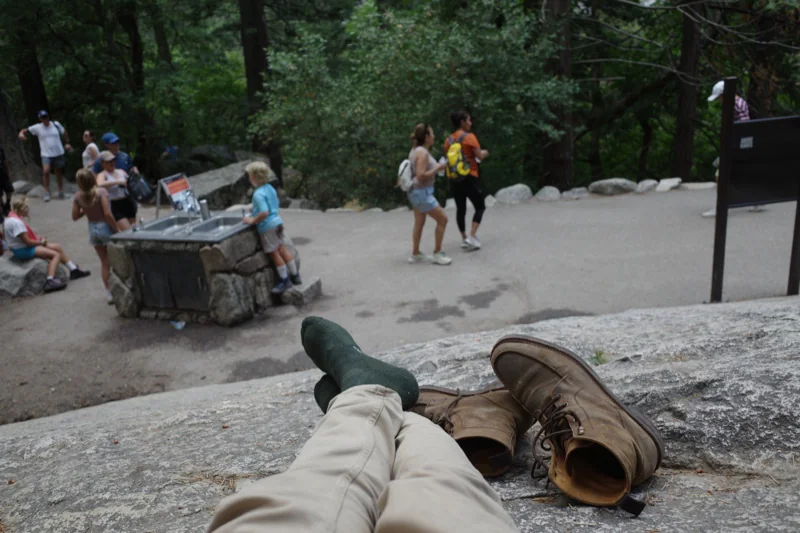
Postscript: The Weather, in Hindsight
After finishing this piece, I pulled up Open-Meteo's hourly weather data for the summit coordinates that day. These are model-reconstructed values on a grid several kilometers wide, not measurements from the summit, but checked against my memory of that night, a few things match surprisingly well.
| Time | Temp | Precip | Cloud | Storm energy | Rock (est.) |
|---|---|---|---|---|---|
| Jul 13 14:00 | 18.0°C | 0 mm | 99% | high | wet |
| Jul 13 15:00 | 15.6°C | 0 mm | 99% | peak | wet |
| Jul 13 17:00 | 14.6°C | 0 mm | 99% | lower | wet |
| Jul 13 18:00 | 14.3°C | 0.4 mm | 100% | high | wet |
| Jul 13 22:00 | 12.4°C | 0.4 mm | 100% | near zero | wet |
| Jul 13 23:00 | 11.4°C | 0.7 mm | 99% | zero | wet |
| Jul 14 01:00 | 11.3°C | 0 mm | 9% | zero | wet |
| Jul 14 06:00 | 9.3°C | 0 mm | 0% | zero | nearly dry |
| Jul 14 07:00 | 10.4°C | 0 mm | 0% | zero | dry |
At 1 a.m. the cloud cover drops from 93% to 9%, exactly the hour I put on my glasses and saw the sky full of stars. There's a little rain at 22:00–23:00, which must be the drizzle that landed on my face in the middle of the night. Around midnight there's a 20 km/h north wind, the one that poured in from the other end of the crevice. The forecast said a low of 13°C, but the data shows 9.3°C at 6 a.m. No wonder it was so much colder than I expected.
The interesting part: during the hours I was getting soaked on the cables, the model shows almost zero rain. A grid several kilometers wide can't see the kind of small thunderstorm that pops up out of nothing over a single valley. But the storm energy stored in the atmosphere doesn't lie: 14:00–15:00 was the peak of the whole day, so the time I was being drenched on the cables was also the day's highest lightning risk; after 23:00 that energy dissipated completely, and the night I slept on the summit carried almost none. In the July 1985 accident on Half Dome, two hikers were killed while sheltering from the rain in a rock hollow on this same summit, by lightning current carried through the soaked rock. Wet granite conducts. A crevice keeps out wind and rain, not lightning.
Rock dryness can be estimated roughly too: steep granite holds very little water — once the rain stops most of it runs off, and how fast the remaining film and surface moisture dry depends on the air, the wind, and the sun. The two afternoon breaks were both too short: the 15:45 pause lasted only a quarter of an hour; after 16:30 there was a full hour with a little sun, and the free water was mostly gone by a bit past 17:00 — the drying patches I walked on barefoot were this stage — but the surface was still dark with soaked-in water, and at 17:30 the rain came back. So even leaving at 17:00, I would have hit the steepest section on damp rock. When I tested the cables at 7:23 p.m. the free water was still there; the call was right. After the 1 a.m. clearing the film was gone by about 2, and the surface moisture by 6. When I went down at 7 the rock was basically dry, with a few streaks where water was still running. It matches the estimate.
So where was the best window to get down? From 13:00 the storm energy shot up fast, and the last clean window had closed by around 13:30. From the moment that first rain cloud appeared, there was no truly safe way down for the rest of the day. The "window at a little past five" I regretted missing was marginal too: the rain returned at 17:30, and the storm energy surged again around 18:00. The real window was the next morning. I went down at 7. That was just about right.
Data: Open-Meteo's hourly model reconstruction for the summit coordinates (adjusted to 2,694 m elevation), not measurements taken on the summit. Rock dryness is a rough estimate from the humidity, wind, and sunlight in that data.