How the “Coders” of Adam Smith's Era Vanished into the Victorian Golden Age
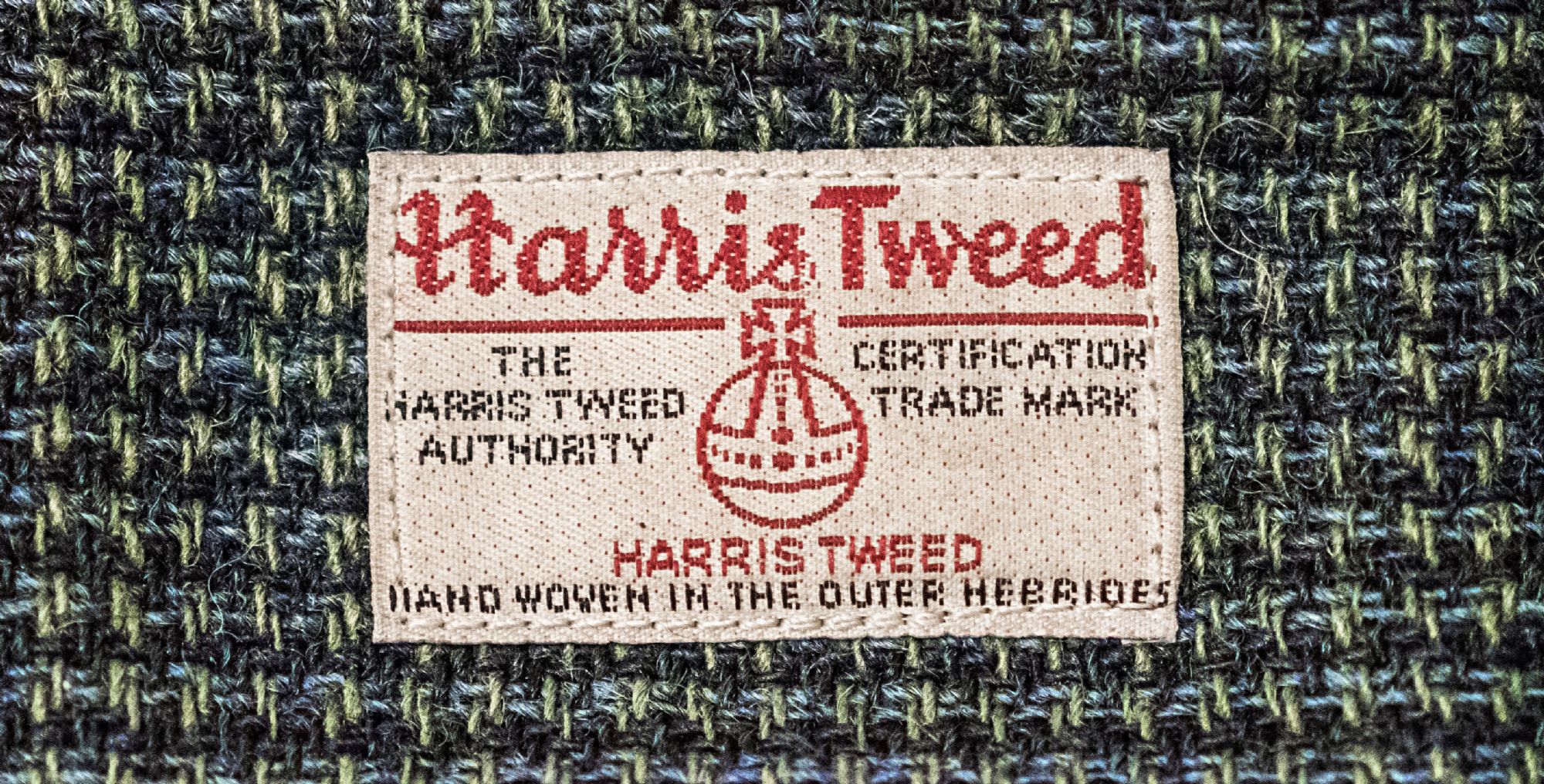
Lovers of woolen goods will likely have come across the hand-woven cloth of the Harris Tweed Authority (HTA). Like French Champagne, its production is legally monopolized within a specific geographic region. The Harris Tweed Act 1993, passed by the British Parliament, defines Harris Tweed as follows:
“Hand-woven by the islanders of Lewis, Harris, Uist and Barra in their homes, using pure virgin wool that has been dyed and spun in the Outer Hebrides, and finished in the Outer Hebrides.”
— The Harris Tweed Act, 1993
Every HTA-certified woolen product today is hand-finished by 150–200 islanders in their homes on the windswept Outer Hebrides off Britain's far northwest coast, with annual output of 1.5–2 million meters.
Few would guess that this beloved tweed cloth — beyond being made in Britain — shares a thread with Charles Dickens's Oliver Twist (1838) and Hard Times (1854), and with Karl Marx's Das Kapital (1867). But the three are not only landmark events in the history of British labor rights; together they let us glimpse, beneath today's media storm about AI labor substitution, how workers' conditions actually evolved under the Industrial Revolution's technological wave — and which factors produced the final outcome.
The conclusion up front: the Industrial Revolution generated enormous wealth in Britain and made it the world's first continuously growing modern economy — but mechanization's labor displacement plunged previously well-paid handicraft workers into ruin. At the 1810–1834 peak, Britain had roughly 250,000 handloom weavers; in the industrial center of Manchester they made up 26% of the entire labor force (1810). By 1840 the count had fallen to 150,000, and by 1860 they had effectively vanished. The same fate befell other handicraft trades in the same window — the framework knitters of Nottinghamshire, the croppers (wool finishers) of Yorkshire, lace knitters, hand-spinners — whole occupations systematically replaced by machinery.
Table 1: The decline of the British handloom weaver (1780–1860)
| Period | Weekly wage (shillings) | Hours | Workforce (UK) |
|---|---|---|---|
| 1780–1800 (“Golden Age”) | 40 | ~24 h/wk (4 days) | Rising to peak |
| 1802 | 21 | 70+ h/wk | — |
| 1810–1834 (peak count) | — | — | ~250,000; 26% of Manchester labor force |
| 1817 | 9 | 70+ h/wk | — |
| 1830s | 5 | 84–96 h/wk (14–16 h/day) | Steady decline |
| 1840 | — | — | ~150,000 |
| 1860 | — | — | ≈ 0 (effectively gone) |
Drawing on historical anthropometric data — military recruitment records, charity school registers, prison archives — scholars have found that the average adult British male's stature actually fell during the Industrial Revolution. An 1883 survey found that 14-year-old boys from industrial schools were 7 inches shorter and 25 pounds lighter than their counterparts at elite British public schools (such as Eton and Harrow). Even more striking are the life-expectancy numbers: per Edwin Chadwick's 1842 Report on the Sanitary Condition of the Labouring Population, average life expectancy for manual laborers in Manchester in the 1840s was just 17 years, against 38 for the local gentry.
Factories ostensibly offered work for the displaced — but for the great majority of middle-aged male handloom weavers, the transition was nearly impossible. Employers preferred women and children (cheaper, more manageable, less assertive); handloom weavers were scattered through rural cottages across Lancashire, Yorkshire, and the East Midlands, while factories were concentrated in Manchester, Leeds, and Glasgow, requiring the family to relocate to an urban slum; and many refused to enter the factories even under destitution — the 1826 Lancashire power-loom riots were precisely the displaced handloom weavers attacking the machines that had replaced them. So those who really did “transition into the factories” were largely their children; the displaced adults themselves mostly aged out in poverty.
The 1834 New Poor Law (Poor Law Amendment Act 1834) restricted able-bodied adults' access to relief, and required that any relief be earned in a government-supervised workhouse for work that often did not cover even basic subsistence — cutting off the floor of the social safety net. Many displaced workers could not even scrape together passage to America (a steerage ticket cost roughly £4–5 in the 1830s, equal to a full year's income for a weaver earning 5 shillings a week), nor could they afford to step away from the lowest-wage factory to participate in political organizing, lest they go hungry.
Britain's power loom destroyed not only its own handloom weavers but the entire Indian handloom-textile industry. Between 1800 and 1860, Indian textile exports fell by 98%, while British textile exports into India rose by 6,300%; India's share of world manufacturing collapsed from about 25% in 1750 to under 3% by 1880. Dacca (Dhaka) in Bengal, once the world's center of fine muslin, was almost completely hollowed out. Estimates put the number of displaced Indian artisans at between 10 and 30 million, forced back into agriculture. A single technological revolution can simultaneously gut the labor markets of two continents, and the colonial-subject workers had none of the political-resistance channels Britain's own laborers eventually organized — the pattern is being replayed worldwide today as AI displaces outsourced call-center and data-labeling work.
When Adam Smith wrote The Wealth of Nations in 1776, he described how a single “woolen coat” was the product of the cooperative labor of shepherds, sorters, wool-combers, dyers, scribblers, spinners, weavers, fullers, and dressers — reflecting that Britain's handicraft manufacture had already built an extraordinarily intricate division of labor. Ironically, this was precisely the apex of the “handicraft” economy. What's even more ironic is that, in Book V Chapter 1 of the same work, Smith predicted what would happen next: a worker who “has no occasion to exert his understanding, or to exercise his invention” in “a few very simple operations” for his whole life will “generally become as stupid and ignorant as it is possible for a human creature to become” — “mutilated and deformed in the most essential part of the character of human nature.” This was the factory work that displaced handicraft workers were eventually forced into. But Smith himself never connected the division of labor he praised with the factory alienation he warned against into a single causal chain.
These handicraftsmen were the most literate working group of their day — reading at the loom was a defining image of the handloom weaver. Through guilds and the seven-year apprenticeship system mandated by the Statute of Artificers (1563), they controlled the supply of skilled labor and thus maintained their high wages. It was precisely those high wages and social standing that made them the most profitable target for industrial capital to replace.
Today, we can only roughly glimpse what these trades looked like 250 years ago on the privileged islands under Harris Tweed Authority's monopoly. The HTA is like one of those Pacific island species that survives only because its mainland counterparts have long since gone extinct — preserved by remote geography, sparse population that never drew in industrial capital, and the careful cultivation of an aristocratic luxury brand after textile manufacture was fully mechanized.
Yet several modern groups still persistently retain rent-extracting pricing power. The most iconic is the American Medical Association (AMA) — it controls everything from US medical-school accreditation to Medicare price-setting. Owing to its strong organization and the social-capital pipelines of the medical profession itself, the AMA has won the great majority of legal challenges to its authority over the past century, persistently shielding the interests of the US healthcare system. To this day, US per-unit healthcare cost is 2–3 times that of other developed countries, and US healthcare spending takes 17% of GDP (vs 8–12% in other developed economies). Specific gate-keeping mechanisms include: the closure of roughly 30% of US medical schools after the 1910 Flexner Report, with medical-school enrollment held down ever since; state medical licensure restricting cross-state practice, locking each state's physician supply to its in-state residents; and scope-of-practice laws restricting nurse practitioners (NPs) and other substitute professionals from delivering services that physicians could otherwise be displaced from.
The AMA is not alone. The modern Corn Laws also include: zoning laws that protect existing homeowners' asset values at the expense of renters — Hsieh-Moretti (2019) estimate that US GDP would be 9–13% higher absent the housing misallocation, and Glaeser-Gyourko estimate zoning premiums of $200K–$1M per unit; and occupational licensure, which covers 29% of the US workforce, with Kleiner-Krueger estimating annual deadweight losses of $20–30 billion. The shared structure is the same: a well-organized minority (doctors, homeowners, incumbents in a profession) systematically extracts rents from a dispersed majority (patients, renters, would-be entrants) through political-administrative capture.
This is the critical point for the AI era. Productivity gains do not automatically translate into broad welfare gains — the final distribution depends on each individual trade's political-organizational capacity. The AMA case is not just a critique of US healthcare; it is a preview of which professions will be protected and which will be sacrificed under AI substitution. When AI begins to substitute for physician work (AI diagnostics, AI documentation), tools like medical-school enrollment caps, cross-state licensure restrictions, and scope-of-practice limits on nurse practitioners will be deployed to constrain AI's legal scope of practice in medicine, thereby protecting physician income. Lawyers (state bar + courtroom-representation requirements + CLE thresholds), CPAs, architects, dentists, and licensed clinical psychologists follow the same pattern.
Knowledge workers without this regulatory architecture — programmers (no licensure), translators (no licensure), copywriters and content creators (no licensure), paralegals and junior analysts (no independent professional identity), customer-service workers (already partially offshored before AI substitution) — have no such shield. They face the 19th-century handloom weaver's position: wage collapse, political demands hard to organize, generational rather than within-cohort transition.
The Industrial Revolution did not simply “displace labor.” It displaced unorganized labor. AI will do the same — AI will not hit knowledge workers uniformly; it will sort them along the line of political-organizational capacity. Well-defended professions will absorb the productivity dividend through regulatory wage protection; undefended trades will absorb the displacement cost through wage collapse.
So we can see that several factors together determine the welfare level of a given worker group:
Table 2: The three prerequisites of mass labor substitution
| Precondition | Industrial Revolution (1810–1850) | AI era today (2010–?) |
|---|---|---|
| Technology makes substitution possible | Steam-powered loom (power loom, 1785), spinning machinery (jenny 1764, mule 1779), shearing frame, gig-mill | Large language models (LLM), generative AI, reasoning models, code automation |
| The target group's high pay makes substitution profitable | Handloom weavers earned 40 shillings/week in 1800, far above general manual labor | Lawyers, programmers, analysts, translators, copywriters — knowledge workers' relatively high pay in developed economies |
| The group is poorly organized or legally constrained | Combination Acts (1799–1824) banned unions; full legalization only came in 1871–75 | Tech/knowledge workers' union density is very low (US private-sector <6%); little collective-action tradition; remote work and platform economy make organizing harder |
And the reasons that British handicraftsmen's situation deteriorated so sharply in the space of half a century can be summarized as follows:
- The law forbade union activity — the Combination Acts (1799–1824) explicitly outlawed workers' associations; even after partial repeal in 1824 they remained heavily restricted, with full legalization only in 1871–75.
- The numerous laborers could not organize well, while the small number of employers maintained tacit coordination to suppress wages — this is precisely the asymmetry Smith described in 1776 in Book I Chapter 8 of The Wealth of Nations: “Masters are always and everywhere in a sort of tacit, but constant and uniform combination, not to raise the wages of labour above their actual rate … The masters … can combine much more easily; and the law, besides, authorises, or at least does not prohibit their combinations, while it prohibits those of the workmen.” Smith observed it in 1776, but Parliament would not correct it for a century.
- The Tories, representing the landed-gentry interest, passed the Corn Laws (1815–1846) — high tariffs on imported grain pushed British food prices 30–50% above continental Europe (Williamson 1990 estimates effective tariff rates around 54% in the 1830s). Because ordinary workers spent 60–70% of income on food, this was a direct compression of real wages. Smith had already predicted the costs of this tariff regime in 1776 in Book IV Chapter 5 (subsidies on exports and restrictions on imports keep “the home market price of corn above what it would naturally rise to”). His argument waited 70 years to be taken up by Richard Cobden and the Anti-Corn Law League, finally leading to repeal in 1846.
- The lost demand from the impoverished workers was substituted by factory-owners' consumption, vigorous investment, and export demand — the economy did not slip into depression. On the contrary, Britain entered the Victorian Golden Age around 1850 (roughly 1850–1873), with traditional handicraft trades by 1860 essentially extinguished.
One point worth flagging specifically: the destruction of handicraft (1810–1850) and the Victorian Golden Age (1850–1873) were not contemporaneous; they were sequential. The prosperity of the Golden Age was built on the prior destruction of the handicraft economy. Capital's share of national income rose from 30% (1770) to peak 50% (1850) — this is the labor share that was redistributed to capital. The supply of cheap mass-consumption goods (cotton cloth, sugar, tea) was bought with the destruction of the handicraft workers. The Golden Age's welfare improvements (rising real wages, falling food prices, mass consumer goods) benefited the grandchildren of the displaced weavers, not the weavers themselves — most of the displaced adult male weavers had already died, emigrated, or aged out in the workhouse by 1850.
Britain's laborers did not remain entirely silent. They also exploited the friction between the Tories (representing the landed-gentry interest) and the Whigs (representing factory owners), and from 1837 to 1839 mounted the Anti-Poor Law Movement (1837–1839). (It is worth noting that the Tories, the Whigs, and the later labor movement are the direct historical origins of today's UK Conservative Party, Liberal Democrats, and Labour Party three-party structure.)
From 1838 to 1848, the Chartism / People's Charter movement (1838–1848) converted the anti-Poor-Law energy into a systematic political programme. Three national petitions:
Table 3: The three petitions of Chartism (1838–1848)
| Year | Signatures | Parliamentary outcome | Significant aftermath |
|---|---|---|---|
| 1839 | 1.3M | Rejected (235 vs 46) | November Newport Rising: ~5,000 Welsh Chartists fired on by troops, 22 dead; leaders sentenced to death (commuted to transportation) |
| 1842 | 3.3M | Rejected (287 vs 49) | August “Plug Plot” general strike: ~500,000 workers disabled factory boilers across Lancashire, Yorkshire, Staffordshire; suppressed by the military |
| 1848 | 5.7M (with forgeries) | Rejected | April 10 Kennington Common rally: 150–300K gathered in London; police prevented the march on Parliament; the movement fragmented thereafter |
The six Chartist demands were: universal male suffrage, secret ballot, abolition of the property qualification for MPs, payment of MPs, equal electoral districts (ending “rotten boroughs”), and annual parliaments. While the movement was suppressed, it imposed real political pressure and cost on the elite. In fact, five of the six demands were implemented within 80 years:
Table 4: Implementation path of the six Chartist demands
| 1838 Chartist demand | Year implemented | Lag from 1838 |
|---|---|---|
| Universal male suffrage | 1867 (urban) → 1884 (rural) → 1918 (incl. partial women's) | 29 / 46 / 80 yrs |
| Secret ballot | 1872 Ballot Act | 34 yrs |
| Abolition of MP property qualification | 1858 | 20 yrs |
| Payment of MPs | 1911 | 73 yrs |
| Equal constituencies | 1885 Redistribution Act | 47 yrs |
| Annual parliaments | Never implemented | — |
Outside Chartism, the Rochdale Pioneers were founded in 1844 by unemployed flannel weavers and launched the modern cooperative movement; but the most destitute of the displaced weavers could not afford even the cooperative's minimum buy-in.
Because the Union Navy blockaded Confederate ports during the American Civil War, cotton supply was cut off, and from 1861 to 1865 the cotton-textile center of Lancashire endured a five-year famine (the Lancashire Cotton Famine, 1861–1865). The Lancashire union laborers, despite their own hunger, still chose to support the Union and the emancipation of Black slaves — a choice that profoundly shook the British elite (in January 1863 Lincoln wrote his famous “To the Workingmen of Manchester” letter thanking them for their stance). In 1866, days of unrest at Hyde Park in London (the Conservative government had banned a Reform League meeting; crowds tore down park railings) forced Disraeli's hand. In 1867, Britain passed the Second Reform Act 1867 (Representation of the People Act 1867), extending the franchise to all working-class urban men.
During this same period, Karl Marx — whose close collaborator Friedrich Engels worked in a Manchester textile firm from 1842 to 1869 and wrote The Condition of the Working Class in England (1845), supplying him with a wealth of first-hand material — organized the First International (International Workingmen's Association, IWMA, founded 1864), and published Volume I of Das Kapital in Hamburg in September 1867.
Only from this point did British workers' real incomes begin to rise meaningfully, sharing at last in the productivity gains of the Industrial Revolution — a full 90 years after Adam Smith observed the apex of handicraft.
Returning to the present, if we analyze the factors that will shape the outcome of today's labor substitution:
- Although today's AI has not yet achieved fully end-to-end human replacement, there is no doubt that at key stages it has already dramatically reduced the need for human intervention. The bottleneck of labor substitution is arguably not model capability but how firms organize themselves to peel away the few stages still requiring human input.
- Especially in developed economies, the relatively high pay of knowledge workers compared to the broader workforce is — just as the high-paid British handicraftsman was in Smith's day — attracting massive capital toward substitution.
- In the United States, the Democratic Party today partly represents urban professionals' interests, and knowledge workers enjoy universal suffrage since 1918 plus the buffer of the modern welfare state. But given that knowledge workers lack the union experience and tradition of collective action that factory workers had, that remote work and platform-based employment make collective action harder than 19th-century factory-floor organizing, and that a large fraction of the workforce consists of immigrants without full political rights — effective organizing in their own defense is difficult.
- And modern welfare arrangements — unemployment insurance, healthcare subsidies — while providing a minimum safety net, also objectively dampen the urgency to engage in political organizing and collective struggle. Compared to the 1830s handloom weavers who fell into outright destitution after displacement, today's displaced knowledge workers still have a cushion, which paradoxically may make structural reform harder to mobilize.
And we must also recognize: we are closer right now to 1810 (the early-deployment phase of displacement) Britain than to 1855 (the Golden Age) Britain. The real distribution of AI's productivity dividend — the kind of broad welfare improvement seen in the Victorian Golden Age — would, by the Industrial Revolution's timeline, not come until 2050–2080, by which point the first generation of AI-displaced workers themselves will have aged out.
So, on the basis of our analysis of British laborers' situation during the Industrial Revolution, we can conclude: we will very likely see massive labor substitution and inter-group redistribution over the next 20–30 years. Although the laborers of the Industrial Revolution era won many channels for laborers in many modern economies to fight for and voice their own interests, whether those channels can be used effectively is a serious question. And by the timeline of the Industrial Revolution, the genuine reforms that follow the friction may not arrive until the current generation of workers has aged out entirely — by which time the welfare improvements will be felt by their grandchildren, not by them.
Main references: Adam Smith, The Wealth of Nations (1776); Friedrich Engels, The Condition of the Working Class in England (1845); Karl Marx, Das Kapital Vol. I (1867); Charles Dickens, Oliver Twist (1838) and Hard Times (1854); Bythell, D. (1969), The Handloom Weavers; Allen, R. (2009), The British Industrial Revolution in Global Perspective; Williamson, J. (1990), “The Impact of the Corn Laws”; Chadwick, E. (1842), Report on the Sanitary Condition of the Labouring Population of Great Britain.